Sep 17, 2026pneumatic cylinder
What Causes a Pneumatic Cylinder to Move Slowly?
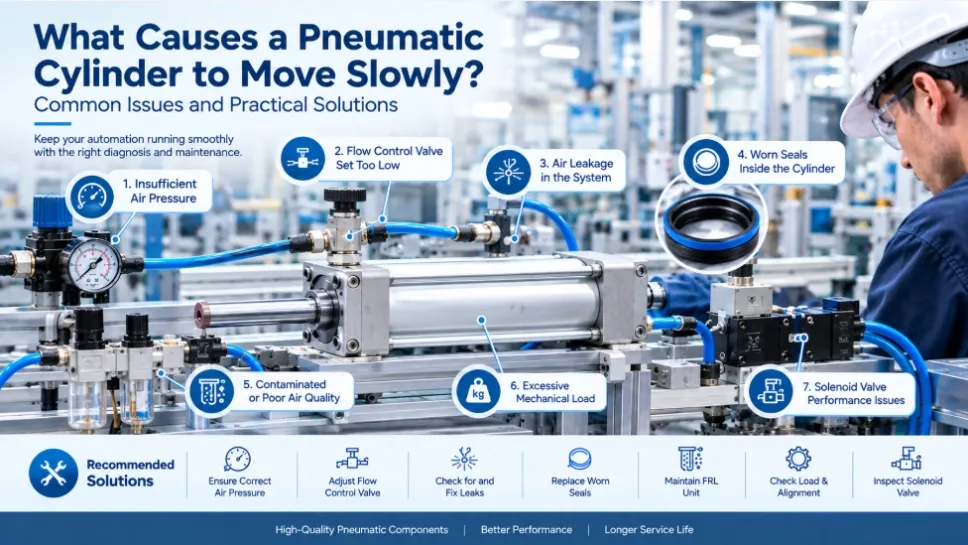
A slow-moving pneumatic cylinder is often caused by low air pressure, restricted airflow, air leakage, worn seals, contaminated air, excessive mechanical load, or faulty solenoid valves.
What Causes a Pneumatic Cylinder to Move Slowly?
A pneumatic cylinder is designed to provide smooth and reliable linear motion in automated equipment. When the cylinder begins to move more slowly than expected, production efficiency can drop, cycle times become longer, and machine performance may suffer. Fortunately, slow cylinder movement is usually caused by a few common issues that can be identified and corrected with proper inspection.
This article explains the most common reasons why a pneumatic cylinder moves slowly and offers practical solutions to restore normal operation.
1. Insufficient Air Pressure
The first thing to check is the compressed air supply. Pneumatic cylinders require adequate pressure to generate enough force and maintain the desired speed. If the air pressure is lower than the cylinder's operating requirement, movement will naturally become slower.
Pressure loss may occur because of compressor problems, air leaks, or pressure settings that are too low. Use a pressure gauge to verify the pressure at the cylinder rather than only at the compressor.
Solution: Ensure the air supply matches the recommended operating pressure and repair any leaks in the pneumatic system.
2. Flow Control Valve Set Too Low
Many pneumatic systems use flow control valves to adjust cylinder speed. If the valve opening is too small, airflow is restricted, causing the piston to extend or retract slowly.
This issue often occurs after maintenance when flow control settings are changed but not restored.
Solution: Adjust the flow control valve gradually while monitoring the cylinder movement until the required speed is achieved.
3. Air Leakage in the System
Even a small air leak can reduce system efficiency. Leaks may occur at pneumatic fittings, air tubes, solenoid valves, or inside the cylinder itself.
When compressed air escapes before reaching the cylinder, the available airflow decreases, resulting in slower motion and unstable performance.
Solution: Inspect all connections with a leak detection solution or soapy water. Replace damaged fittings, seals, or tubing if necessary.
4. Worn Seals Inside the Cylinder
The piston seal is responsible for maintaining pressure inside the cylinder. After long periods of operation, seals can wear out due to friction, contamination, or poor lubrication.
Worn seals allow compressed air to bypass the piston, reducing output force and slowing cylinder movement.
Solution: Replace worn sealing components and choose cylinders equipped with high-quality, wear-resistant seals for longer service life.
5. Contaminated or Poor Air Quality
Moisture, dust, oil residue, and other contaminants can accumulate inside pneumatic components. These contaminants increase friction and may even damage internal seals.
A clogged air preparation unit can also reduce airflow throughout the system.
Solution: Install and regularly maintain an FRL (Filter, Regulator, Lubricator) unit. Clean or replace filter elements according to the maintenance schedule.
6. Excessive Mechanical Load
Sometimes the cylinder itself is not the problem. If the load becomes heavier than originally designed or the guide mechanism develops excessive friction, the cylinder will require more force to move the equipment.
Misalignment between the cylinder rod and the driven mechanism can also increase resistance.
Solution: Check machine alignment, inspect guide rails and bearings, and verify that the selected cylinder bore size is suitable for the actual load.
7. Solenoid Valve Performance Issues
A faulty or partially blocked solenoid valve may not allow sufficient airflow to reach the cylinder. Dirt, worn internal parts, or electrical problems can all reduce valve performance.
If the valve shifts slowly, the cylinder response will also be delayed.
Solution: Clean the valve, inspect the coil and spool, and replace worn components if required.
Conclusion
A slow-moving pneumatic cylinder is often the result of air pressure loss, restricted airflow, air leakage, worn seals, contaminated air, excessive mechanical resistance, or valve problems. By following a systematic inspection process, most issues can be identified quickly and resolved before they affect production.
Regular maintenance, clean compressed air, and high-quality pneumatic components are the keys to keeping your automation system operating at its best.