Oct 29, 2026pneumatic fittings
Why Does a Pneumatic Tube Come Out of the Fitting
Correct installation, proper tube sizing, quality fittings, and regular inspection prevent tube blowout, improving pneumatic system reliability and safety.
Why Does a Pneumatic Tube Come Out of the Fitting
A pneumatic tube suddenly coming out of a fitting is one of the most common problems in compressed air systems. Besides causing air leakage and machine downtime, it can also create safety risks, especially in high-pressure applications.
Many users assume the fitting is defective, but in reality, tube blowout is often caused by installation mistakes, incompatible tubing, or poor-quality components. Understanding the real cause helps prevent the same issue from happening again.
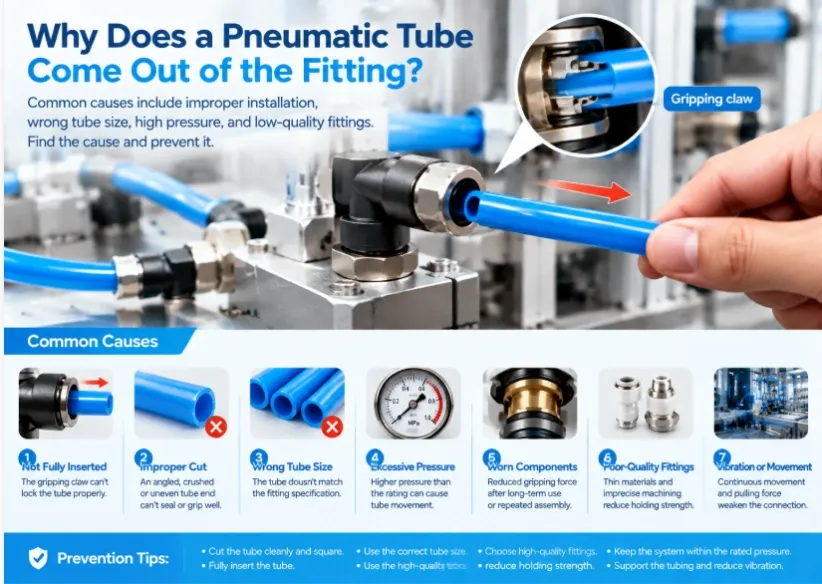
1. The Tube Was Not Fully Inserted
This is the most common reason.
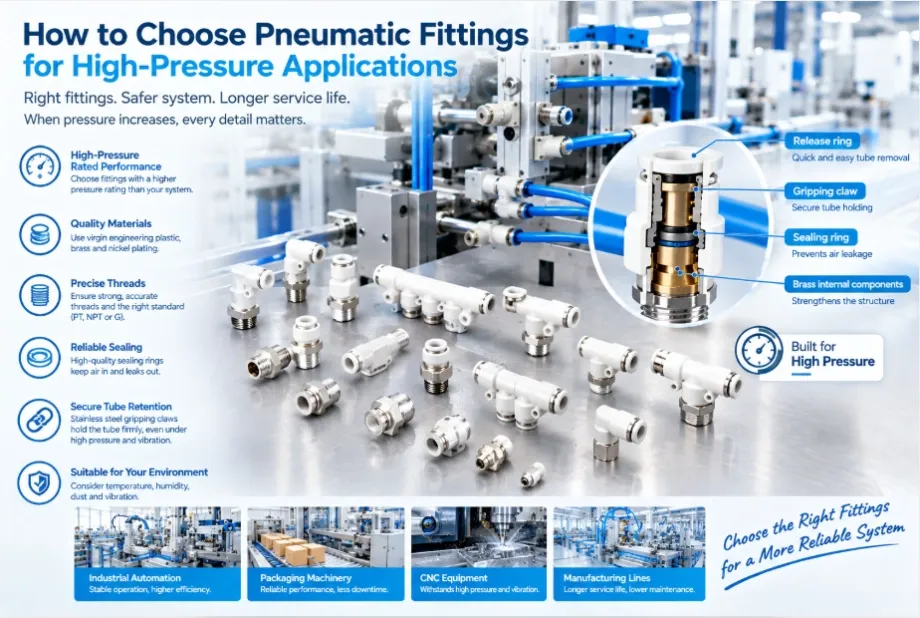
Push-in fittings are designed so the tube passes through the release ring, stainless steel gripping claw, and sealing ring until it reaches the internal tube stop.
If the tube is only partially inserted, the gripping claw cannot lock the tube correctly. Under pressure, the tube may gradually move outward until it eventually pops free.
Whenever installing a pneumatic tube, push it in firmly until it reaches the internal stop. A gentle pull afterward confirms that the connection is secure.
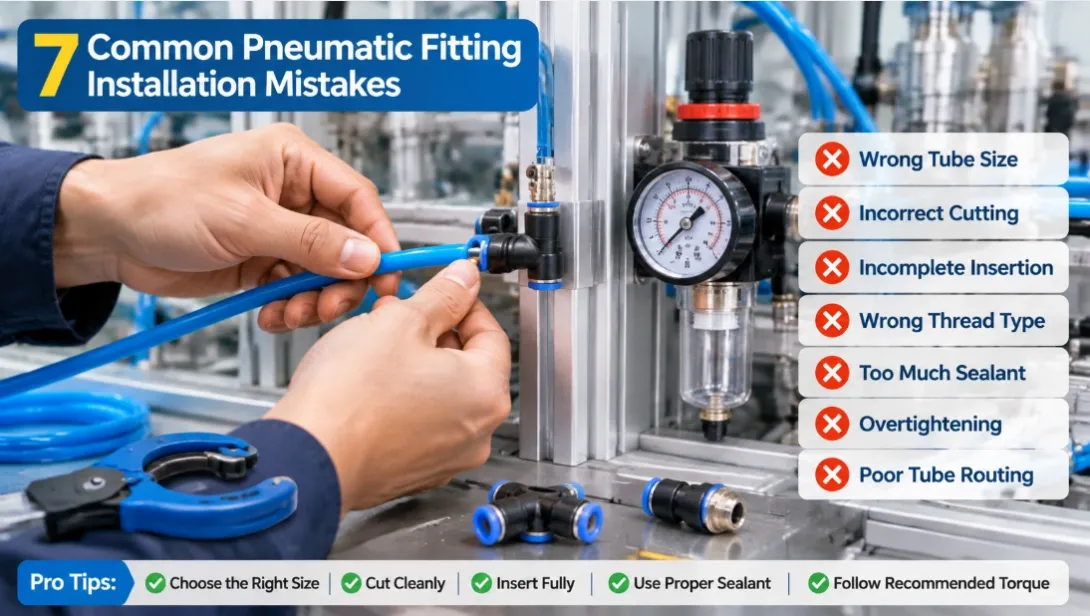
2. The Tube End Was Not Cut Properly
The condition of the tube end directly affects the connection.
If the tube is cut at an angle, crushed, scratched, or out of round, it may not seal correctly against the O-ring. The gripping claw also cannot hold the tube evenly.
Always use a dedicated tube cutter to make a clean, square cut. Avoid using ordinary scissors or side cutters, as they often deform the tubing.
A smooth tube end improves both sealing performance and holding strength.
3. The Tube Size Does Not Match the Fitting
Using the wrong tube size is another common cause of tube blowout.
Even a small difference in outside diameter can reduce the gripping force inside the fitting.
For example, a fitting designed for 8 mm tubing should only be used with 8 mm tubing manufactured within the correct tolerance. Undersized tubing may slide out under pressure, while oversized tubing can damage the internal seal during installation.
Always verify both the tube outside diameter and the fitting specification before assembly.
4. Excessive System Pressure
Every pneumatic fitting has a recommended working pressure.
If the actual operating pressure exceeds the fitting's rating, the gripping mechanism and sealing components experience much greater force than they were designed for.
Pressure spikes caused by rapid valve switching or compressor fluctuations can also contribute to tube movement.
Selecting fittings with an adequate pressure rating provides a valuable safety margin for demanding applications.
5. Worn Internal Components
Over time, repeated tube insertion and removal gradually wears the internal gripping claw and sealing ring.
As these components wear, the tube retention force decreases, making it easier for the tube to slip under pressure or vibration.
If a fitting has been reused many times, replacing it is usually more reliable than attempting to continue using worn components.
6. Poor-Quality Fittings
Not all pneumatic fittings are manufactured to the same standard.
Low-quality fittings often use recycled plastic, thin brass inserts, poorly machined internal parts, or weak stainless steel gripping claws.
These products may work initially but often lose their holding strength after extended use.
High-quality fittings typically feature:
Virgin engineering plastic bodies
Precision-machined brass internal components
Stainless steel gripping claws
Durable sealing rings
Thicker threaded sections for improved strength
These design details significantly improve tube retention and long-term reliability.
7. Excessive Vibration or Tube Movement
Machines with constant movement place additional stress on pneumatic connections.
If the tubing is unsupported or frequently pulled during machine operation, repeated movement gradually weakens the connection.
Proper tube routing, sufficient clamping, and avoiding excessive bending near the fitting can greatly reduce the risk of accidental tube release.
How to Prevent Tube Blowout
Preventing this problem is usually straightforward if a few installation practices are followed:
Cut the tube cleanly and square.
Fully insert the tube until it reaches the internal stop.
Confirm the tube size matches the fitting specification.
Operate within the fitting's pressure rating.
Replace worn fittings instead of reusing them indefinitely.
Choose fittings made with high-quality materials and precision manufacturing.
Support tubing properly to reduce vibration and pulling force.
Conclusion
A pneumatic tube coming out of a fitting is rarely caused by a single factor. In most cases, it results from improper installation, mismatched tubing, excessive pressure, worn internal components, or low-quality fittings.
By selecting well-manufactured pneumatic fittings and following correct installation procedures, you can greatly reduce air leaks, improve system safety, and keep your pneumatic equipment operating reliably over the long term.