Nov 1, 2026pneumatic fittings
Seven Common Pneumatic Fitting Installation Mistakes and How to Avoid Them
Correct tube sizing, clean cutting, full insertion, proper thread matching, suitable sealant, careful tightening, and proper routing prevent leaks and ensure reliable pneumatic connections.
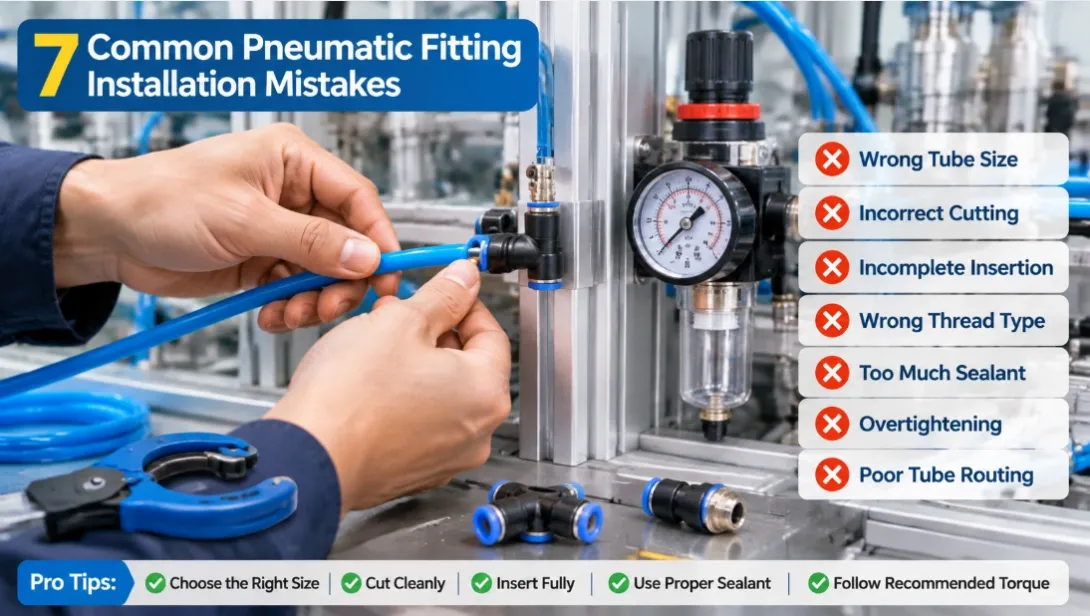
Seven Common Pneumatic Fitting Installation Mistakes and How to Avoid Them
Pneumatic fittings may look like small and simple components, but their installation has a direct impact on the performance of an entire compressed air system. A poorly installed fitting can cause air leakage, unstable pressure, loose tubing, and unnecessary equipment downtime.
In many cases, these problems are not caused by defective products. They result from incorrect installation methods or small details that are easily overlooked during assembly.
Whether you are installing push-in fittings, brass fittings, or pneumatic tube connectors, avoiding the following seven mistakes can help improve connection reliability and extend service life.
1. Using the Wrong Tube Size
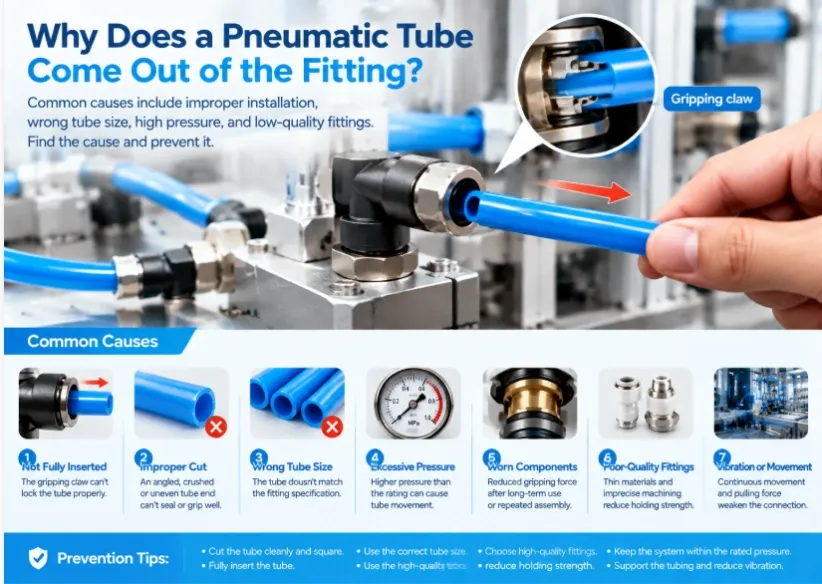
One of the most common installation mistakes is selecting tubing that does not match the fitting specification.
Push-in pneumatic fittings are designed for specific tube outside diameters, such as 4 mm, 6 mm, 8 mm, 10 mm, and 12 mm. Even a small difference in diameter can affect the gripping force and sealing performance.
If the tube is too small, it may slip out under pressure. If it is too large, insertion may damage the internal O-ring.
How to avoid it: Always check the fitting specification and measure the tube's outside diameter before installation. Never assume that similar-looking tubes are interchangeable.
2. Cutting the Tube Incorrectly
The tube end is an important part of a push-in connection.
Using ordinary scissors or unsuitable cutting tools can leave an uneven, angled, or crushed edge. This may prevent the tube from sitting correctly inside the fitting and can damage the sealing ring.
How to avoid it: Use a dedicated pneumatic tube cutter to produce a clean, straight cut. Make sure the tube end is free from cracks, scratches, and deformation before inserting it.
3. Not Inserting the Tube Completely
A push-in fitting relies on an internal gripping mechanism to hold the tube securely.
If the tube is not pushed all the way into the fitting, the gripping claw may not engage properly. The connection might initially appear normal, but the tube can gradually move outward when compressed air enters the system.
How to avoid it: Push the tube firmly into the fitting until it reaches the internal stop. After installation, gently pull the tube to confirm that it is locked in place.
4. Choosing the Wrong Thread Type
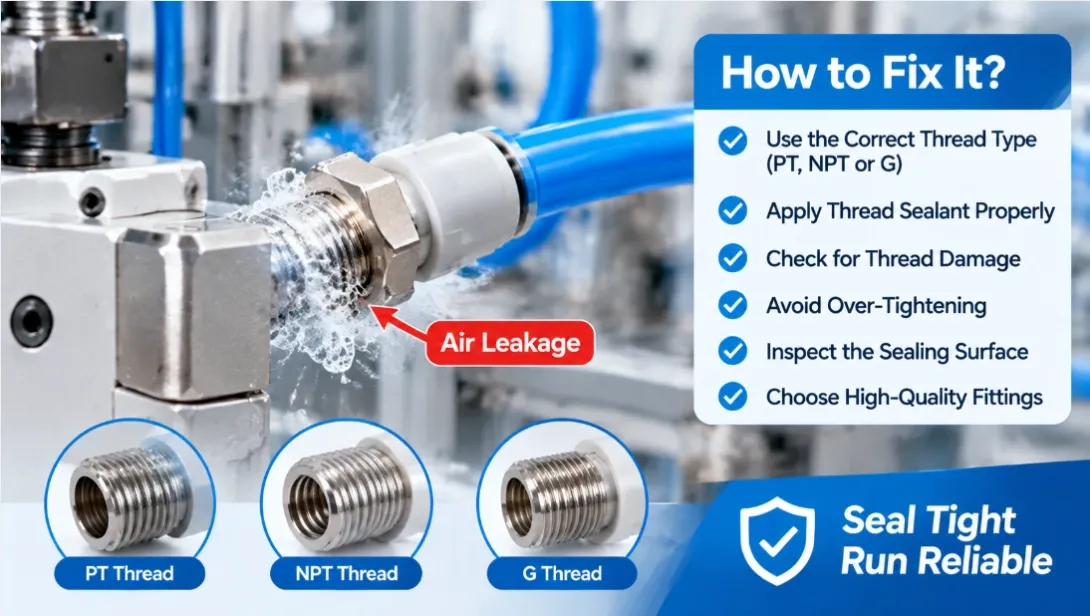
Pneumatic fittings commonly use PT, NPT, and G threads. Although they may look similar, their dimensions and sealing methods are different.
Mixing incompatible thread standards can result in poor engagement, damaged threads, and air leakage.
For example, PT and NPT are both tapered threads, but they have different specifications. G threads are parallel threads and generally require a suitable sealing washer or O-ring.
How to avoid it: Confirm the thread standard of both the fitting and the equipment port before ordering or installation.
5. Applying Too Much Thread Sealant
Thread sealant helps prevent air leakage, but excessive application can create additional problems.
Too much PTFE tape may interfere with proper thread engagement. Loose tape fragments can also enter the pneumatic system and affect valves or other precision components.
How to avoid it: Apply an appropriate amount of PTFE tape in the tightening direction for compatible tapered threads. Keep the first thread clear and follow the fitting manufacturer's sealing recommendations.
6. Overtightening the Fitting
Another common mistake is applying excessive force when tightening a pneumatic fitting.
Overtightening may deform metal threads, damage sealing surfaces, or crack plastic fitting bodies. This is particularly important when installing plastic push-in fittings with brass threaded inserts.
How to avoid it: Use suitable tools and follow the recommended installation torque. Tighten the fitting securely without applying unnecessary force.
7. Ignoring Tube Routing and Operating Conditions
Even a correctly installed fitting can develop problems if the tubing is poorly arranged.
Sharp bends, excessive pulling force, constant vibration, and mechanical interference can place continuous stress on the connection. Over time, these conditions may cause tube movement, fitting damage, or leakage.
How to avoid it: Plan the tube routing carefully. Maintain an appropriate bending radius, avoid unnecessary tension, and use tube clamps where additional support is needed.
Also, make sure the fitting's working pressure and temperature ratings are suitable for the actual application.
Final Thoughts
Most pneumatic fitting installation problems can be avoided by paying attention to a few basic details: correct tube sizing, clean tube cutting, complete insertion, proper thread matching, and controlled tightening.
Product quality matters, but even a high-quality fitting cannot perform properly if it is installed incorrectly.
For distributors, machine builders, and maintenance engineers, choosing reliable pneumatic fittings and following standard installation practices can reduce compressed air leakage, lower maintenance costs, and improve the long-term stability of pneumatic systems.
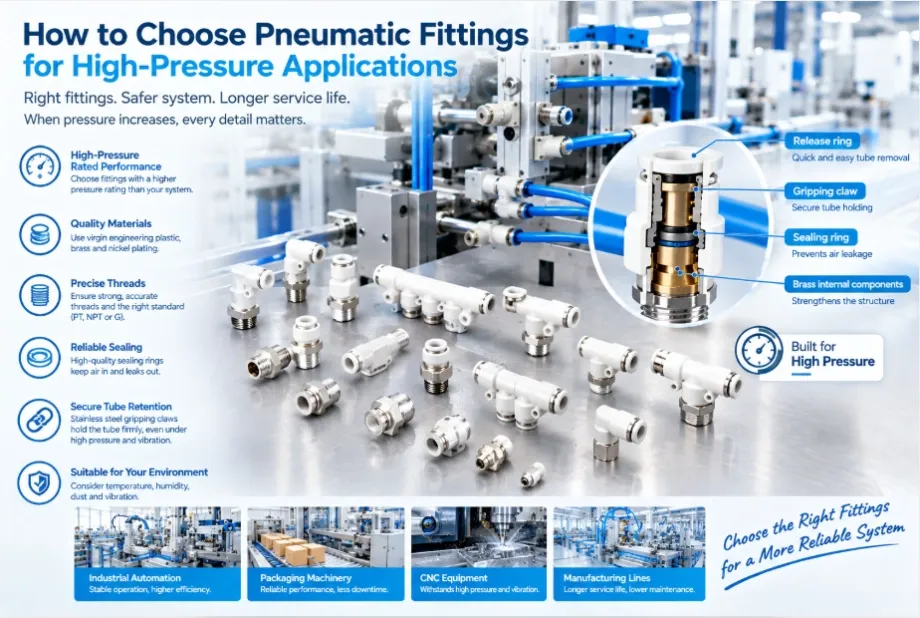
When selecting fittings for industrial applications, always consider material quality, thread accuracy, internal gripping components, and sealing performance rather than focusing on price alone.