
Oct 28, 2026pneumatic fittings

How to Choose Pneumatic Fittings for High-Pressure Applications

Choose high-quality pneumatic fittings with strong materials, reliable sealing, and precision threads to ensure safe, leak-free high-pressure performance.
7403c998-bc2f-42f3-bb92-c2576af94313
How to Choose Pneumatic Fittings for High-Pressure Applications
Compressed air systems are designed to operate efficiently, but as working pressure increases, every component in the system is placed under greater stress. Pneumatic fittings that perform well in standard applications may not provide the same level of reliability in high-pressure environments if they are not properly selected.
Whether your equipment is used in industrial automation, packaging machinery, CNC systems, or manufacturing lines, choosing the right pneumatic fittings is essential for preventing air leaks, reducing maintenance, and improving system safety.

Understand Your Operating Pressure

The first step is knowing the actual working pressure of your system.
Many users focus only on the compressor's maximum output, but the fitting should be selected according to the system's continuous working pressure and possible pressure spikes. Safety margin is equally important.
Always choose fittings with a rated pressure higher than your system's maximum operating pressure. This helps ensure stable performance even during sudden pressure fluctuations.

Select High-Strength Materials

Material quality becomes increasingly important as pressure rises.
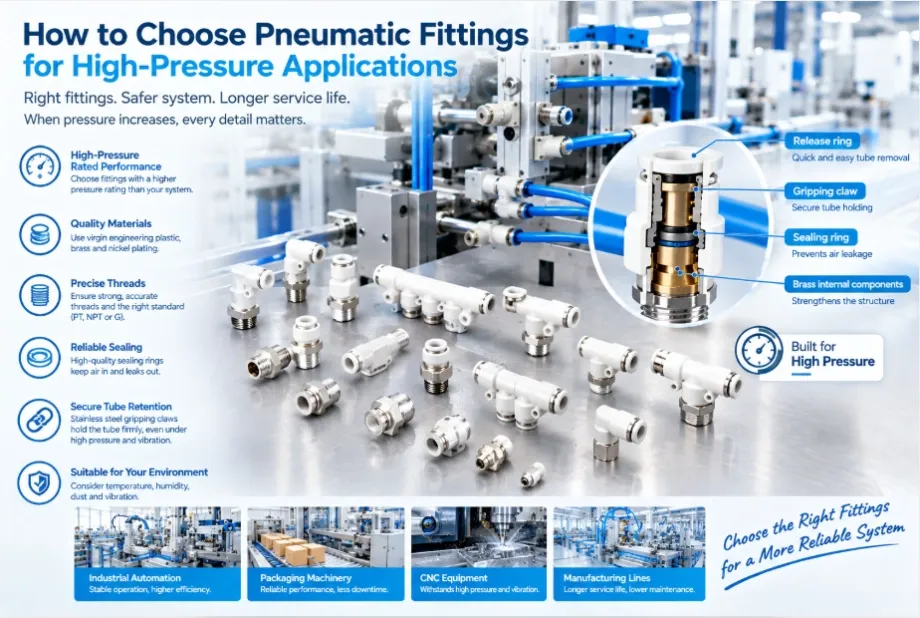
For plastic push-in fittings, the body should be made from virgin engineering plastic rather than recycled material. Virgin plastic provides better strength, dimensional stability, and resistance to cracking.
The threaded section should use high-quality nickel-plated brass. Brass offers excellent mechanical strength while resisting corrosion in humid industrial environments.
Inside the fitting, precision-machined brass components help reinforce the structure and improve long-term reliability under continuous pressure.

Pay Attention to Thread Quality

The threaded connection is one of the most common locations for air leakage.
High-pressure applications require threads with accurate machining and sufficient wall thickness. Thin or poorly machined threads may deform during installation or repeated maintenance, eventually causing leakage.
Quality fittings often feature thicker threaded sections that distribute tightening force more evenly and improve sealing performance.
It is also important to select the correct thread standard, such as PT, NPT, or G thread, to ensure compatibility with existing equipment.

Evaluate the Sealing System

The sealing ring plays a critical role in preventing compressed air from escaping.
A high-quality seal should maintain elasticity under repeated pressure cycles while resisting wear and aging.
The internal structure should also keep the tube properly aligned so that the sealing ring remains evenly compressed during operation. Stable sealing reduces maintenance requirements and extends the service life of both the fitting and the tubing.

Check Tube Retention Performance

As pressure increases, greater force is applied to the air tube.
A reliable push-in fitting uses a precision stainless steel gripping claw that securely holds the tube without damaging its surface.
Poor-quality gripping mechanisms may allow the tube to move slightly under pressure or vibration, leading to gradual air leakage or even tube blowout in extreme cases.
For applications with continuous vibration, always verify that the fitting provides sufficient tube holding force.

Consider the Working Environment

Pressure is not the only factor affecting fitting performance.
Temperature, humidity, dust, oil mist, and machine vibration all influence service life.
If the equipment operates in harsh industrial environments, choose fittings with corrosion-resistant metal components and durable engineering plastics that can withstand long-term exposure to demanding conditions.
A fitting designed for laboratory equipment may not be suitable for heavy industrial production lines.

Don't Choose by Price Alone

Low-cost fittings may appear almost identical to premium products, but internal construction often differs significantly.
Higher-quality fittings usually include:
Virgin engineering plastic body
Precision-machined brass internal components
Thicker threaded connections
Stainless steel gripping claws
High-quality sealing rings
Consistent machining tolerances
Although the initial purchase price may be slightly higher, these features reduce air leakage, minimize downtime, and lower overall maintenance costs throughout the equipment's service life.

Work with a Reliable Supplier

Choosing the right supplier is just as important as selecting the right fitting.
A professional manufacturer should provide clear technical specifications, pressure ratings, material information, and quality inspection procedures. Consistent manufacturing standards ensure that every fitting performs the same way across different production batches.
For OEM manufacturers and distributors, a dependable supplier also means stable product quality, faster delivery, and better technical support.

Conclusion

Selecting pneumatic fittings for high-pressure applications involves much more than matching thread size or tube diameter. Material quality, thread strength, sealing performance, tube retention, and manufacturing precision all contribute to long-term reliability.
By investing in well-designed fittings with high-quality brass components, durable engineering plastics, and precision manufacturing, you can build a compressed air system that operates safely, minimizes leakage, and delivers dependable performance for years to come.
Read next

Oct 28, 2026pneumatic fittings

How to Choose Pneumatic Fittings for High-Pressure Applications

Choose high-quality pneumatic fittings with strong materials, reliable sealing, and precision threads to ensure safe, leak-free high-pressure performance.

7403c998-bc2f-42f3-bb92-c2576af94313
How to Choose Pneumatic Fittings for High-Pressure Applications
Compressed air systems are designed to operate efficiently, but as working pressure increases, every component in the system is placed under greater stress. Pneumatic fittings that perform well in standard applications may not provide the same level of reliability in high-pressure environments if they are not properly selected.
Whether your equipment is used in industrial automation, packaging machinery, CNC systems, or manufacturing lines, choosing the right pneumatic fittings is essential for preventing air leaks, reducing maintenance, and improving system safety.

Understand Your Operating Pressure

The first step is knowing the actual working pressure of your system.
Many users focus only on the compressor's maximum output, but the fitting should be selected according to the system's continuous working pressure and possible pressure spikes. Safety margin is equally important.
Always choose fittings with a rated pressure higher than your system's maximum operating pressure. This helps ensure stable performance even during sudden pressure fluctuations.

Select High-Strength Materials

Material quality becomes increasingly important as pressure rises.
For plastic push-in fittings, the body should be made from virgin engineering plastic rather than recycled material. Virgin plastic provides better strength, dimensional stability, and resistance to cracking.
The threaded section should use high-quality nickel-plated brass. Brass offers excellent mechanical strength while resisting corrosion in humid industrial environments.
Inside the fitting, precision-machined brass components help reinforce the structure and improve long-term reliability under continuous pressure.

Pay Attention to Thread Quality

The threaded connection is one of the most common locations for air leakage.
High-pressure applications require threads with accurate machining and sufficient wall thickness. Thin or poorly machined threads may deform during installation or repeated maintenance, eventually causing leakage.
Quality fittings often feature thicker threaded sections that distribute tightening force more evenly and improve sealing performance.
It is also important to select the correct thread standard, such as PT, NPT, or G thread, to ensure compatibility with existing equipment.

Evaluate the Sealing System

The sealing ring plays a critical role in preventing compressed air from escaping.
A high-quality seal should maintain elasticity under repeated pressure cycles while resisting wear and aging.
The internal structure should also keep the tube properly aligned so that the sealing ring remains evenly compressed during operation. Stable sealing reduces maintenance requirements and extends the service life of both the fitting and the tubing.

Check Tube Retention Performance

As pressure increases, greater force is applied to the air tube.
A reliable push-in fitting uses a precision stainless steel gripping claw that securely holds the tube without damaging its surface.
Poor-quality gripping mechanisms may allow the tube to move slightly under pressure or vibration, leading to gradual air leakage or even tube blowout in extreme cases.
For applications with continuous vibration, always verify that the fitting provides sufficient tube holding force.

Consider the Working Environment

Pressure is not the only factor affecting fitting performance.
Temperature, humidity, dust, oil mist, and machine vibration all influence service life.
If the equipment operates in harsh industrial environments, choose fittings with corrosion-resistant metal components and durable engineering plastics that can withstand long-term exposure to demanding conditions.
A fitting designed for laboratory equipment may not be suitable for heavy industrial production lines.

Don't Choose by Price Alone

Low-cost fittings may appear almost identical to premium products, but internal construction often differs significantly.
Higher-quality fittings usually include:
Virgin engineering plastic body
Precision-machined brass internal components
Thicker threaded connections
Stainless steel gripping claws
High-quality sealing rings
Consistent machining tolerances
Although the initial purchase price may be slightly higher, these features reduce air leakage, minimize downtime, and lower overall maintenance costs throughout the equipment's service life.

Work with a Reliable Supplier

Choosing the right supplier is just as important as selecting the right fitting.
A professional manufacturer should provide clear technical specifications, pressure ratings, material information, and quality inspection procedures. Consistent manufacturing standards ensure that every fitting performs the same way across different production batches.
For OEM manufacturers and distributors, a dependable supplier also means stable product quality, faster delivery, and better technical support.

Conclusion

Selecting pneumatic fittings for high-pressure applications involves much more than matching thread size or tube diameter. Material quality, thread strength, sealing performance, tube retention, and manufacturing precision all contribute to long-term reliability.
By investing in well-designed fittings with high-quality brass components, durable engineering plastics, and precision manufacturing, you can build a compressed air system that operates safely, minimizes leakage, and delivers dependable performance for years to come.


Recommended articles

Guides visitors may want next

Helpful guides, field notes, and stories for choosing with more context.