
Oct 31, 2026pneumatic fittings

How to Fix Air Leakage Around a Pneumatic Fitting Thread

Proper thread matching, correct sealing, careful installation, and quality pneumatic fittings prevent air leakage, reduce energy waste, and improve system reliability.
9fcd92cb-3d8b-4dbd-a31e-a410f1215d38

How to Fix Air Leakage Around a Pneumatic Fitting Thread

Air leakage around pneumatic fitting threads is a common problem in compressed air systems. Even a small leak can waste compressed air, increase energy consumption, reduce operating pressure, and affect the performance of connected equipment.
For maintenance engineers and pneumatic component buyers, understanding why threaded connections leak is important. In many cases, the problem is not caused by the fitting itself but by incorrect thread selection, poor installation, damaged sealing surfaces, or low-quality components.
Here are the most common causes and practical ways to fix them.

1. Check Whether the Thread Types Match

One of the most common reasons for air leakage is using incompatible thread types.
Pneumatic fittings commonly use three thread standards:
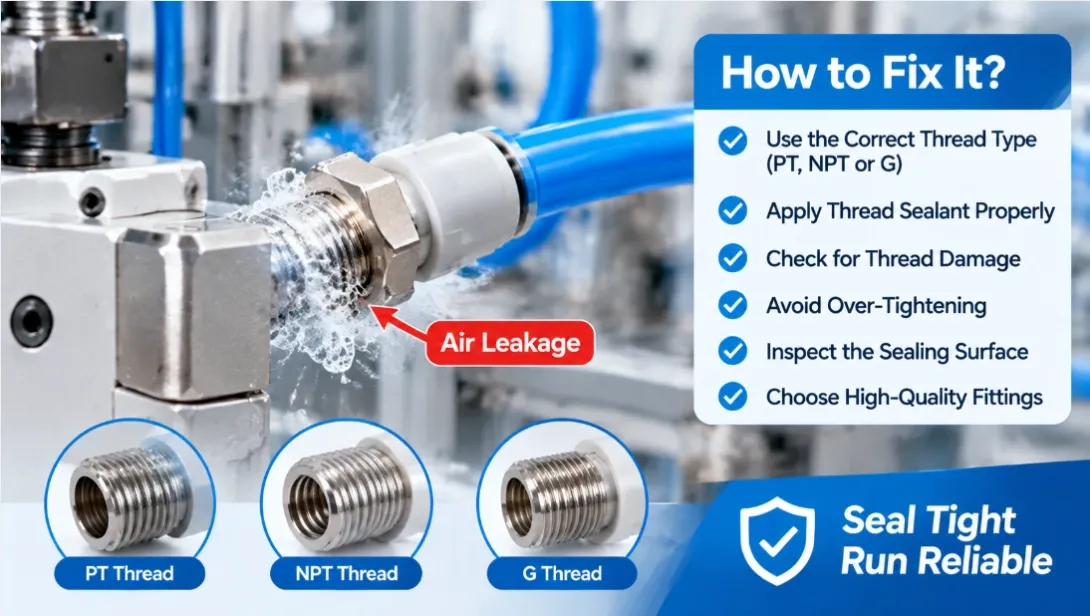
  • PT (BSPT): A tapered thread commonly used in pneumatic systems.
  • NPT: An American tapered thread with a different thread angle and pitch.
  • G (BSPP): A parallel thread that generally requires a sealing washer or O-ring, depending on the fitting design.
Although PT and NPT threads look similar, their specifications are different. They should not be treated as interchangeable.
For example, forcing an NPT fitting into a PT threaded port may damage the threads and create an unreliable seal.
Solution: Check the thread specification of both the fitting and the equipment port before installation. Use matching thread standards to avoid unnecessary leakage.

2. Apply the Correct Thread Sealant

Thread sealant plays an important role in preventing compressed air from escaping through the gaps between tapered threads.
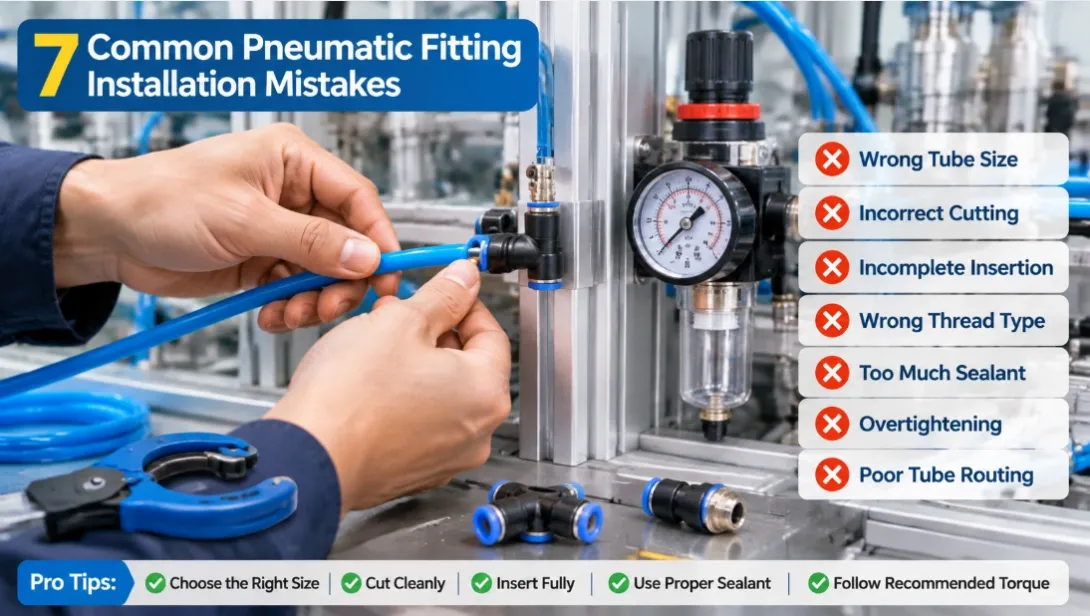
PTFE tape is commonly used for PT and NPT connections. However, applying too much tape or wrapping it incorrectly can create problems.
Excessive tape may cause additional installation stress, while loose pieces can enter pneumatic valves and cylinders, potentially affecting their operation.
Solution: Wrap PTFE tape in the tightening direction, keeping it away from the first thread to prevent loose material from entering the air passage. Alternatively, use a suitable pneumatic thread sealant according to the manufacturer's recommendations.
For G parallel threads, use the sealing washer or O-ring specified by the fitting design rather than assuming thread tape alone will provide a reliable seal.

3. Check for Damaged or Poorly Machined Threads

Thread quality directly affects connection reliability.
If the threads are scratched, deformed, uneven, or poorly machined, the fitting may not tighten correctly. Repeated installation and removal can also damage the threaded section.
Low-quality fittings sometimes have insufficient thread thickness, making them more vulnerable to deformation during tightening.
Solution: Inspect both the fitting and the threaded port before assembly. Replace components with damaged threads. Choose fittings with accurate thread machining and sufficient material thickness.

4. Avoid Excessive Tightening

Many people believe that tightening a fitting as much as possible will stop air leakage. In reality, excessive tightening can make the problem worse.
Too much torque may damage the threads, deform the fitting body, or crack plastic components.
This is particularly important when installing plastic push-in fittings with metal threaded inserts.
Solution: Tighten the fitting gradually using the appropriate tools. Follow the manufacturer's recommended installation torque and avoid applying unnecessary force.

5. Inspect the Sealing Surface

Sometimes, the leakage is not caused by the threads themselves.
Damaged sealing washers, missing O-rings, dirt, or uneven contact surfaces can allow compressed air to escape around the connection.
This is especially relevant for parallel G threads, where sealing often depends on a washer or O-ring rather than the threads.
Solution: Remove the fitting and inspect the sealing surface carefully. Clean away dirt and replace damaged or missing sealing elements before reinstalling.

6. Choose High-Quality Pneumatic Fittings

Product quality has a significant impact on long-term sealing performance.
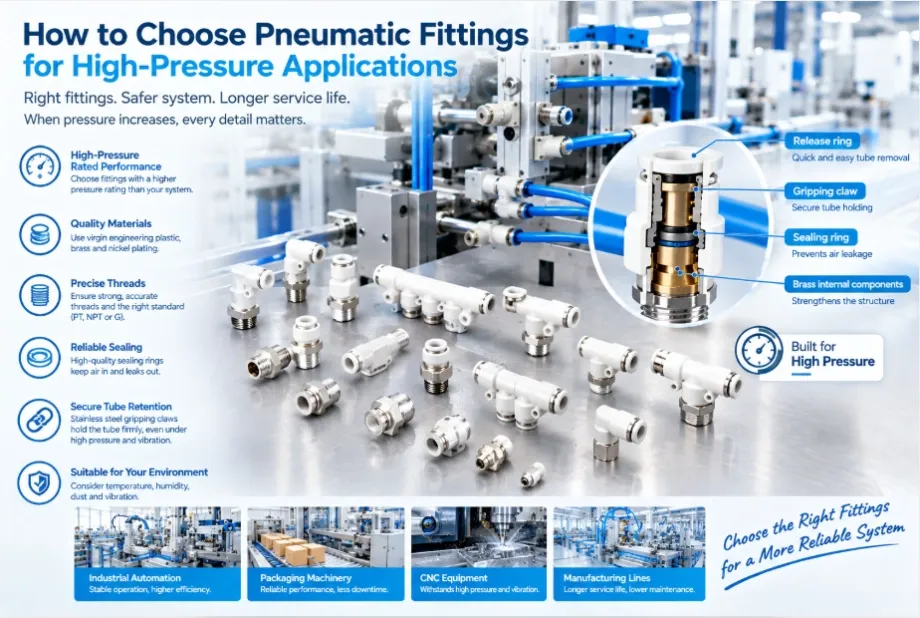
Reliable pneumatic fittings should have:
  • Precision-machined PT, NPT, or G threads.
  • Sufficient thread thickness and mechanical strength.
  • High-quality brass internal components.
  • Durable sealing rings and washers.
  • Consistent dimensions and strict manufacturing quality control.
A fitting with a well-designed threaded section and quality materials is less likely to suffer from deformation or premature leakage.
Although cheaper products may reduce initial purchasing costs, repeated replacements and compressed air losses can make them more expensive over time.

7. Test the Connection After Installation

After installing or repairing a pneumatic fitting, always check for leakage before returning the equipment to normal operation.
Apply an appropriate leak detection solution around the threaded connection while the system is operating within its specified pressure range. The formation of continuous bubbles indicates a leak.
Never use your hands to search for escaping high-pressure air.
If leakage continues after tightening and resealing, replace the fitting or inspect the equipment port for damage.

Conclusion

Air leakage around pneumatic fitting threads is usually caused by incompatible thread types, incorrect sealing methods, damaged threads, excessive tightening, or poor-quality components.
The best way to prevent these problems is to select the correct PT, NPT, or G thread, follow proper installation procedures, and use fittings manufactured with reliable materials and precise machining.
For industrial automation and compressed air systems, small improvements in threaded connection quality can make a real difference in reducing air loss, maintenance costs, and unexpected equipment downtime.
Read next

Oct 31, 2026pneumatic fittings

How to Fix Air Leakage Around a Pneumatic Fitting Thread

Proper thread matching, correct sealing, careful installation, and quality pneumatic fittings prevent air leakage, reduce energy waste, and improve system reliability.

9fcd92cb-3d8b-4dbd-a31e-a410f1215d38

How to Fix Air Leakage Around a Pneumatic Fitting Thread

Air leakage around pneumatic fitting threads is a common problem in compressed air systems. Even a small leak can waste compressed air, increase energy consumption, reduce operating pressure, and affect the performance of connected equipment.
For maintenance engineers and pneumatic component buyers, understanding why threaded connections leak is important. In many cases, the problem is not caused by the fitting itself but by incorrect thread selection, poor installation, damaged sealing surfaces, or low-quality components.
Here are the most common causes and practical ways to fix them.

1. Check Whether the Thread Types Match

One of the most common reasons for air leakage is using incompatible thread types.
Pneumatic fittings commonly use three thread standards:
  • PT (BSPT): A tapered thread commonly used in pneumatic systems.
  • NPT: An American tapered thread with a different thread angle and pitch.
  • G (BSPP): A parallel thread that generally requires a sealing washer or O-ring, depending on the fitting design.
Although PT and NPT threads look similar, their specifications are different. They should not be treated as interchangeable.
For example, forcing an NPT fitting into a PT threaded port may damage the threads and create an unreliable seal.
Solution: Check the thread specification of both the fitting and the equipment port before installation. Use matching thread standards to avoid unnecessary leakage.

2. Apply the Correct Thread Sealant

Thread sealant plays an important role in preventing compressed air from escaping through the gaps between tapered threads.
PTFE tape is commonly used for PT and NPT connections. However, applying too much tape or wrapping it incorrectly can create problems.
Excessive tape may cause additional installation stress, while loose pieces can enter pneumatic valves and cylinders, potentially affecting their operation.
Solution: Wrap PTFE tape in the tightening direction, keeping it away from the first thread to prevent loose material from entering the air passage. Alternatively, use a suitable pneumatic thread sealant according to the manufacturer's recommendations.
For G parallel threads, use the sealing washer or O-ring specified by the fitting design rather than assuming thread tape alone will provide a reliable seal.

3. Check for Damaged or Poorly Machined Threads

Thread quality directly affects connection reliability.
If the threads are scratched, deformed, uneven, or poorly machined, the fitting may not tighten correctly. Repeated installation and removal can also damage the threaded section.
Low-quality fittings sometimes have insufficient thread thickness, making them more vulnerable to deformation during tightening.
Solution: Inspect both the fitting and the threaded port before assembly. Replace components with damaged threads. Choose fittings with accurate thread machining and sufficient material thickness.

4. Avoid Excessive Tightening

Many people believe that tightening a fitting as much as possible will stop air leakage. In reality, excessive tightening can make the problem worse.
Too much torque may damage the threads, deform the fitting body, or crack plastic components.
This is particularly important when installing plastic push-in fittings with metal threaded inserts.
Solution: Tighten the fitting gradually using the appropriate tools. Follow the manufacturer's recommended installation torque and avoid applying unnecessary force.

5. Inspect the Sealing Surface

Sometimes, the leakage is not caused by the threads themselves.
Damaged sealing washers, missing O-rings, dirt, or uneven contact surfaces can allow compressed air to escape around the connection.
This is especially relevant for parallel G threads, where sealing often depends on a washer or O-ring rather than the threads.
Solution: Remove the fitting and inspect the sealing surface carefully. Clean away dirt and replace damaged or missing sealing elements before reinstalling.

6. Choose High-Quality Pneumatic Fittings

Product quality has a significant impact on long-term sealing performance.
Reliable pneumatic fittings should have:
  • Precision-machined PT, NPT, or G threads.
  • Sufficient thread thickness and mechanical strength.
  • High-quality brass internal components.
  • Durable sealing rings and washers.
  • Consistent dimensions and strict manufacturing quality control.
A fitting with a well-designed threaded section and quality materials is less likely to suffer from deformation or premature leakage.
Although cheaper products may reduce initial purchasing costs, repeated replacements and compressed air losses can make them more expensive over time.

7. Test the Connection After Installation

After installing or repairing a pneumatic fitting, always check for leakage before returning the equipment to normal operation.
Apply an appropriate leak detection solution around the threaded connection while the system is operating within its specified pressure range. The formation of continuous bubbles indicates a leak.
Never use your hands to search for escaping high-pressure air.
If leakage continues after tightening and resealing, replace the fitting or inspect the equipment port for damage.

Conclusion

Air leakage around pneumatic fitting threads is usually caused by incompatible thread types, incorrect sealing methods, damaged threads, excessive tightening, or poor-quality components.
The best way to prevent these problems is to select the correct PT, NPT, or G thread, follow proper installation procedures, and use fittings manufactured with reliable materials and precise machining.
For industrial automation and compressed air systems, small improvements in threaded connection quality can make a real difference in reducing air loss, maintenance costs, and unexpected equipment downtime.


Recommended articles

Guides visitors may want next

Helpful guides, field notes, and stories for choosing with more context.