Oct 5, 2026pneumatic cylinder
Pneumatic Cylinder Installation Guide: Best Practices for Reliable Performance
Proper alignment, clean compressed air, secure mounting, suitable accessories, and regular inspection all contribute to reliable operation and longer service life.
Pneumatic Cylinder Installation Guide: Best Practices for Reliable Performance
A pneumatic cylinder may look simple, but proper installation has a significant impact on its performance and service life. Even a high-quality cylinder can suffer from air leakage, rod wear, reduced speed, or premature failure if it is installed incorrectly. By following a few practical guidelines, maintenance engineers and machine builders can improve system reliability while reducing maintenance costs.
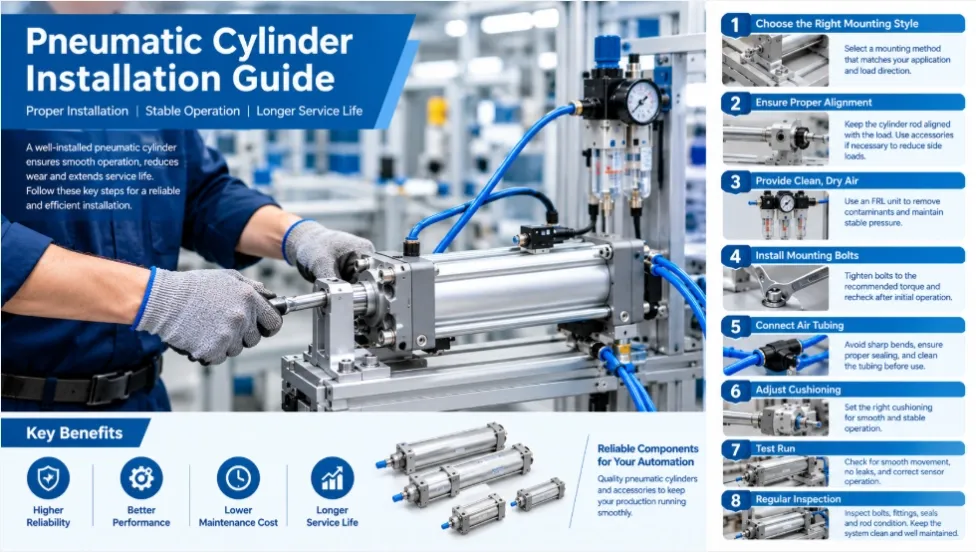
1. Select the Correct Mounting Style
Before installation, choose a mounting method that matches the cylinder's application. Fixed mounting, flange mounting, foot mounting, and clevis mounting each serve different purposes.
For applications where the load moves in a straight line, rigid mounting usually provides the best stability. For applications involving slight movement or angular changes, pivot or clevis mounting helps reduce stress on the piston rod.
Choosing the wrong mounting style often creates unnecessary side loads that shorten cylinder life.
2. Keep the Cylinder Properly Aligned
Alignment is one of the most important installation factors.
The cylinder rod should move in the same direction as the load. If the load is offset or misaligned, continuous side force will be applied to the piston rod, causing excessive wear on bearings and seals.
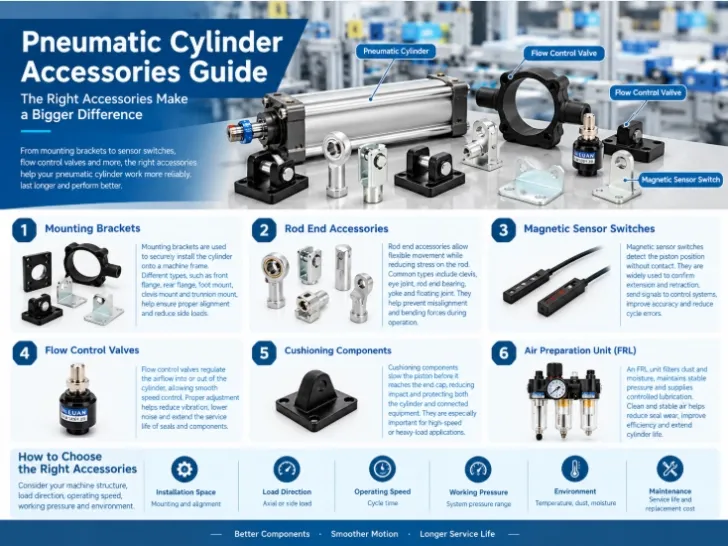
When perfect alignment cannot be achieved, use accessories such as rod clevises, float joints, or fish eye joints to compensate for minor installation errors.
3. Install Clean and Dry Air Supply
Compressed air should always pass through an air preparation unit before entering the cylinder.
A proper FRL (Filter, Regulator, Lubricator) removes water, dust, and oil contamination while maintaining stable operating pressure. Clean air helps protect internal seals and ensures smooth piston movement.
Poor air quality is one of the most common causes of cylinder failure.
4. Secure Mounting Bolts Correctly
All mounting bolts should be tightened according to the manufacturer's recommendations.
Loose bolts may cause vibration and misalignment during operation, while excessive tightening can damage mounting brackets or deform cylinder components.
After several hours of operation, it is good practice to recheck bolt tightness.
5. Connect Air Tubing Carefully
Avoid bending pneumatic tubing too sharply.
Use fittings that match the tube size and thread type, and ensure every connection is properly sealed. Air leaks reduce system efficiency and increase compressor energy consumption.
Before connecting the cylinder, blow compressed air through the tubing to remove dust or metal particles left from installation.
6. Adjust Cushioning Before Production
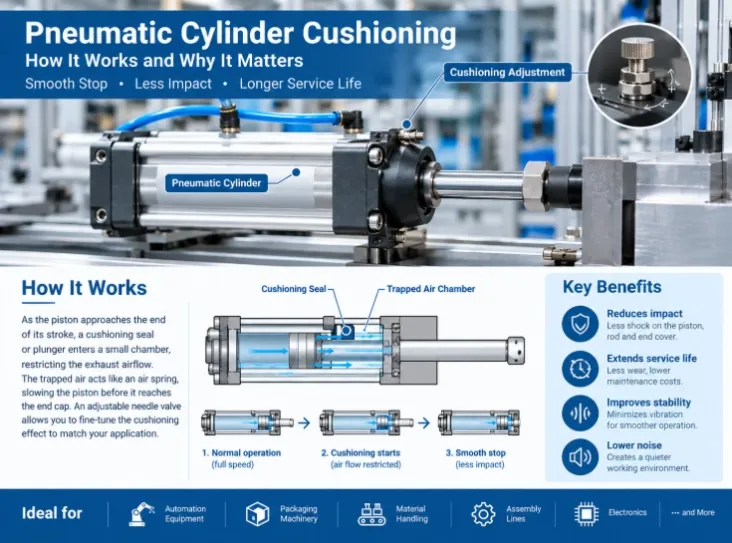
Many pneumatic cylinders include adjustable end cushioning.
Start with a moderate cushioning setting, then fine-tune it during machine testing. Proper cushioning reduces impact at the end of each stroke, lowers noise, and protects both the cylinder and the machine structure.
If the cylinder stops too abruptly or strikes the end cover heavily, readjust the cushioning needle until smooth operation is achieved.
7. Perform a Test Run
Before putting the machine into normal production, operate the cylinder at low speed and low pressure.
Check for:
- Smooth movement
- Air leakage
- Abnormal vibration
- Unusual noise
- Correct stroke length
- Proper sensor operation (for magnetic cylinders)
Any problems found during this stage are much easier to correct before full production begins.
8. Schedule Regular Inspection
Installation is only the first step. Periodic inspection helps maintain long-term performance.
Inspect mounting bolts, air fittings, tubing, seals, and piston rod condition regularly. Clean the piston rod to prevent dust buildup, and replace worn seals before they affect production.
A simple preventive maintenance routine can significantly extend cylinder service life and reduce unexpected downtime.
Conclusion
Correct installation is essential for getting the best performance from a pneumatic cylinder. Proper alignment, clean compressed air, secure mounting, suitable accessories, and regular inspection all contribute to reliable operation and longer service life. Spending a little extra time during installation can prevent costly repairs and production interruptions later, making your pneumatic system more efficient and dependable.