Aug 5, 2026pneumatic cylinder
Pneumatic Cylinder Selection Guide for Automation Engineers
Selecting the correct pneumatic cylinder is essential for building reliable and efficient automation systems.
Pneumatic Cylinder Selection Guide for Automation Engineers
How to Choose the Right Pneumatic Cylinder for Industrial Automation Applications
Pneumatic cylinders are one of the most widely used actuators in industrial automation systems. They convert compressed air energy into linear mechanical motion and provide a simple, reliable, and cost-effective solution for pushing, pulling, lifting, clamping, positioning, and material handling applications.
However, selecting the right pneumatic cylinder is not always straightforward. Incorrect cylinder selection may lead to insufficient force, unstable operation, excessive air consumption, reduced service life, and unexpected downtime.
This guide explains the key factors automation engineers should consider when selecting a pneumatic cylinder for industrial applications.
1. Understand the Application Requirements First
Before choosing a pneumatic cylinder, engineers should clearly define the working conditions and application requirements.
The most important questions include:
- What type of motion is required?
- What is the required force?
- How much stroke length is needed?
- What is the operating speed?
- What environmental conditions will the cylinder face?
- How frequently will the cylinder operate?
A pneumatic cylinder used in a packaging machine may have completely different requirements compared with one used in a robotic assembly system or CNC automation equipment.
A correct selection process starts with understanding the actual application instead of simply choosing a standard cylinder model.
2. Determine the Required Cylinder Type
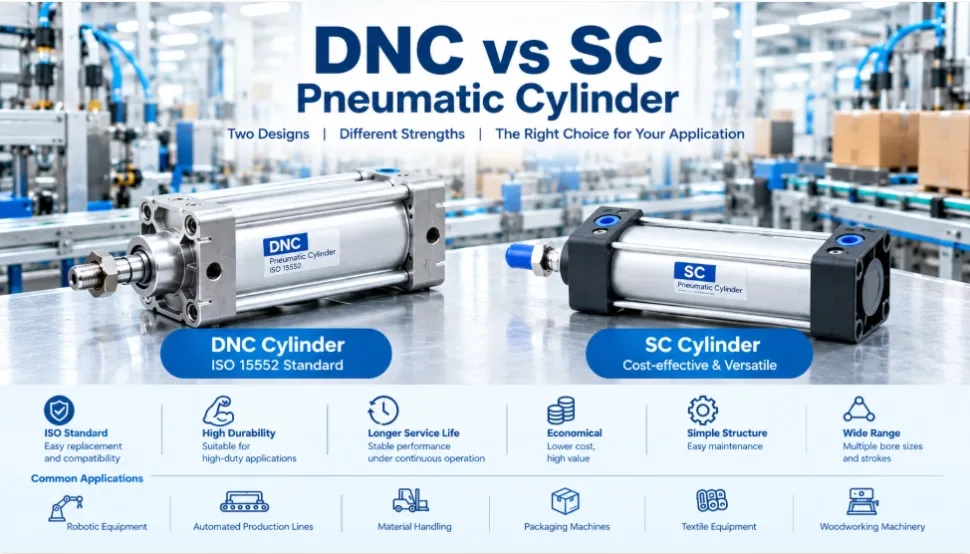
Different automation applications require different cylinder designs. The most common types include:
Single Acting Pneumatic Cylinder
A single acting cylinder uses compressed air to move in one direction and returns by spring force.
Advantages:
- Simple structure
- Lower air consumption
- Easy installation
- Cost-effective solution
Typical Applications:
- Clamping devices
- Small pushing mechanisms
- Door opening systems
- Simple positioning applications
However, the return force of the spring limits the available force and stroke length.
Double Acting Pneumatic Cylinder
A double acting cylinder uses compressed air for both extension and retraction movements.
Advantages:
- Higher control accuracy
- Stable operation
- Suitable for longer strokes
- Provides force in both directions
Common Applications:
- Packaging machinery
- Assembly lines
- Material handling equipment
- Automated production systems
For most industrial automation applications, double acting pneumatic cylinders are the preferred choice.
3. Select the Correct Bore Size
The bore diameter determines the output force of a pneumatic cylinder.
A larger bore provides greater pushing force, while a smaller bore reduces cost and air consumption.
The required force depends on:
- Load weight
- Operating pressure
- Friction resistance
- Safety factor
For example:
A cylinder working at 6 bar pressure with a larger bore can generate significantly more force than a smaller cylinder.
Engineers should always consider a safety margin because real-world applications include friction, acceleration forces, and unexpected loads.
4. Choose the Proper Stroke Length
Stroke length refers to the distance the piston travels during operation.
Common stroke lengths include:
- 25 mm
- 50 mm
- 100 mm
- 200 mm
- 500 mm
- Custom lengths available
When selecting stroke length:
- Avoid choosing a stroke that is too short because it limits movement.
- Avoid excessive stroke length because it increases cost and may reduce stability.
For high-speed automation equipment, a properly selected stroke length helps improve cycle time and machine reliability.
5. Consider Operating Pressure
Most industrial pneumatic cylinders operate between:
4–8 bar compressed air pressure
Before selecting a cylinder, confirm:
- Available air pressure
- Required output force
- Working environment
A cylinder designed for standard industrial pressure may not perform correctly in low-pressure systems.
For demanding applications, engineers should select cylinders with:
- High-quality sealing systems
- Durable piston rods
- Reliable cylinder bodies
6. Pay Attention to Installation Method
The mounting method affects cylinder performance and mechanical stability.
Common mounting options include:
Front Flange Mounting
Suitable for:
- Fixed installation
- Heavy load applications
Rear Pivot Mounting
Suitable for:
- Rotating movements
- Adjustable installation angles
Foot Mounting
Commonly used in:
- Machinery automation
- Assembly equipment
Rod End Mounting
Used when precise mechanical connection is required.
Selecting the correct mounting style helps prevent side loading and premature cylinder wear.
7. Consider Cylinder Material and Environmental Conditions
Different industries require different cylinder materials and protection levels.
Important factors include:
Temperature
For high-temperature environments, special seals and materials may be required.
Dust and Contamination
Applications such as:
- Food processing
- Woodworking
- Metal processing
may require additional protection.
Corrosion Resistance
For humid or corrosive environments, engineers may choose:
- Stainless steel cylinders
- Special surface treatments
- Nickel-plated components
8. Choose the Right Cylinder Accessories
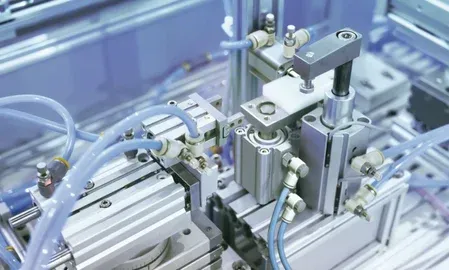
A pneumatic cylinder is usually part of a complete pneumatic system.
Common accessories include:
Pneumatic Fittings
Used for connecting air tubes.
Important factors:
- Thread type
- Tube size
- Sealing performance
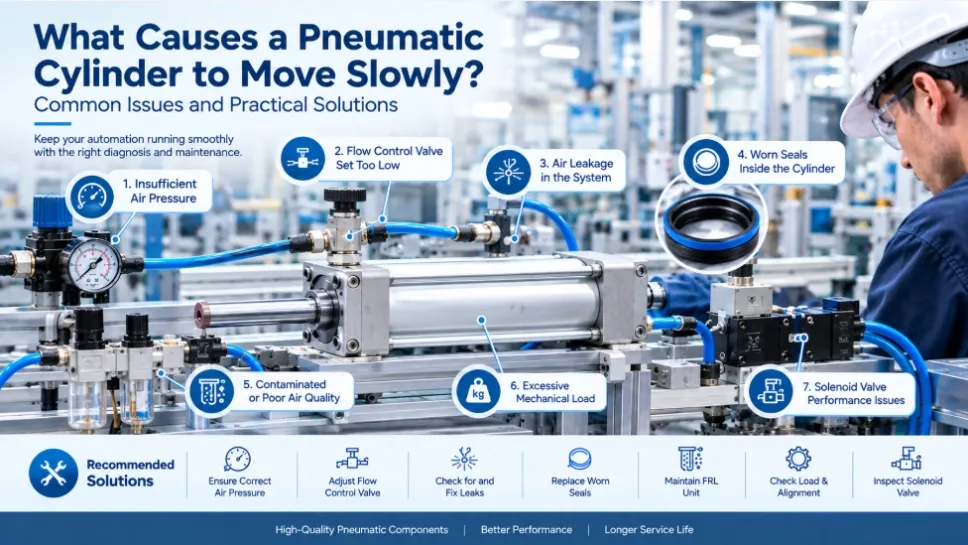
Flow Control Valves
Used to adjust cylinder speed.
Magnetic Sensors
Used for position detection.
Shock Absorbers
Used to reduce impact at the end of the stroke.
Selecting suitable accessories improves system performance and reliability.
9. Common Mistakes When Selecting Pneumatic Cylinders
Choosing a Cylinder Based Only on Price
The cheapest cylinder may result in:
- Air leakage
- Short service life
- Frequent maintenance
Ignoring Side Load Problems
Side loading can cause:
- Rod bending
- Seal damage
- Reduced cylinder lifespan
Selecting Incorrect Bore Size
An undersized cylinder may fail to move the load properly.
An oversized cylinder increases:
- Equipment cost
- Air consumption
- Operating expenses
Not Considering Future Maintenance
A reliable pneumatic cylinder should have:
- Easy replacement seals
- Stable supply availability
- Manufacturer technical support
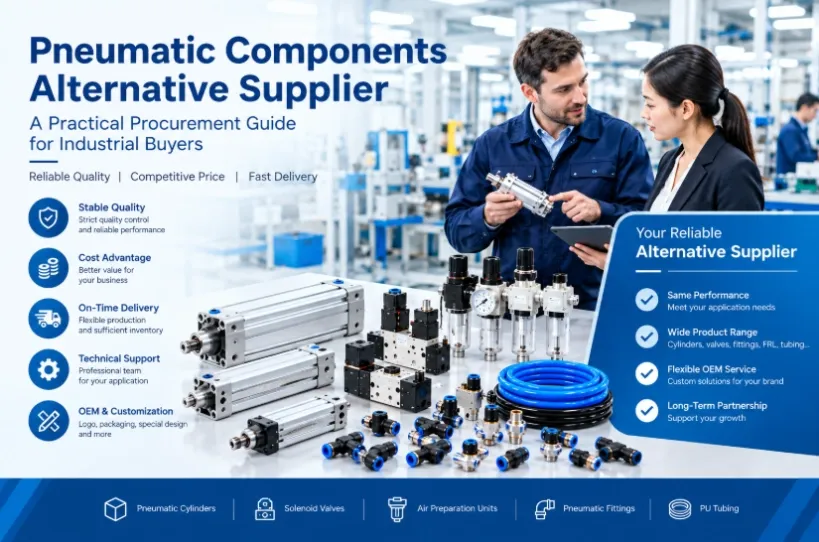
10. How to Select a Reliable Pneumatic Cylinder Supplier
For automation equipment manufacturers, supplier reliability is as important as product quality.
A professional pneumatic cylinder manufacturer should provide:
Technical Support
Including:
- Cylinder selection assistance
- Application recommendations
- Engineering support
Quality Control
Important inspection processes include:
- Air leakage testing
- Dimension inspection
- Material verification
- Performance testing
Customization Capability
Many automation projects require:
- Custom stroke lengths
- Special mounting designs
- OEM branding
- Customized specifications
A reliable supplier helps reduce machine downtime and improves long-term production efficiency.
Conclusion
Selecting the correct pneumatic cylinder is essential for building reliable and efficient automation systems.
Automation engineers should consider:
- Cylinder type
- Bore size
- Stroke length
- Operating pressure
- Mounting method
- Working environment
- Accessories
- Supplier capability
By choosing the right pneumatic cylinder based on actual application requirements, manufacturers can achieve better performance, lower maintenance costs, and improved production efficiency.
GH Machinery provides industrial pneumatic components, including pneumatic cylinders, pneumatic fittings, and automation solutions for global customers.
Contact our engineering team for professional pneumatic cylinder selection support.