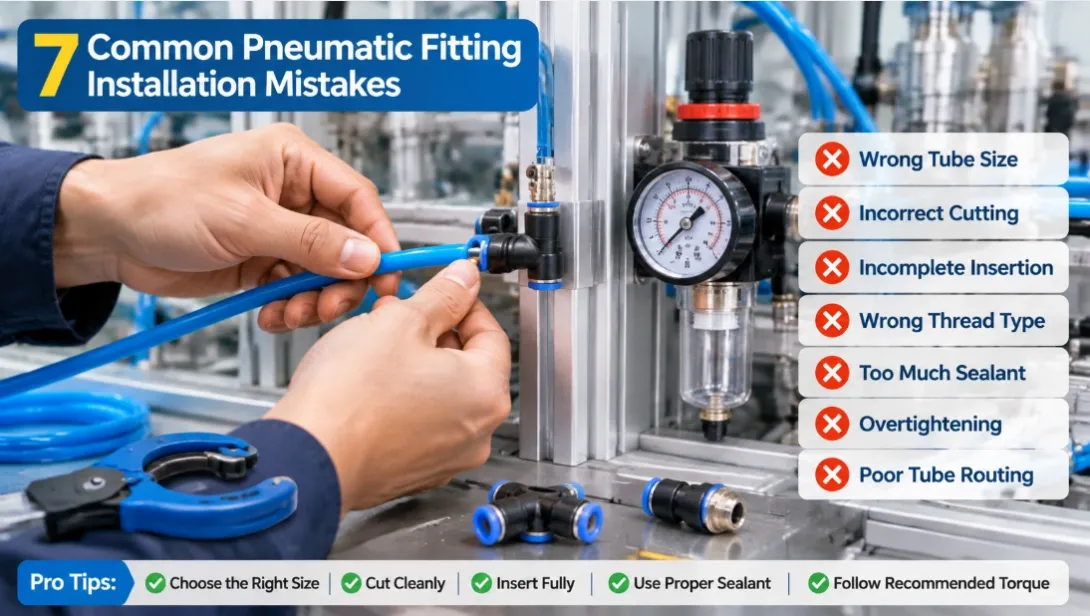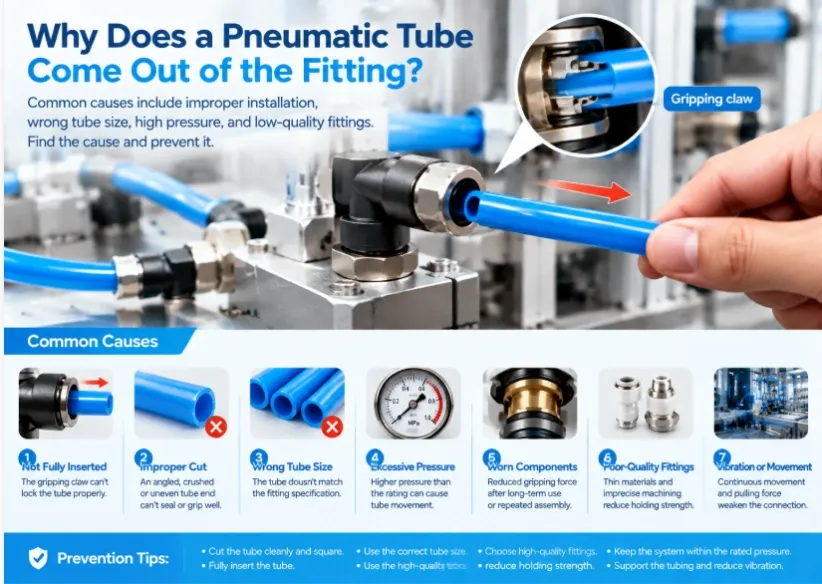
pneumatic fittings
Why Pneumatic Fitting Threads Crack During Installation
Proper thread selection, correct torque, quality fittings, and careful installation prevent thread cracking, air leaks, equipment damage, and costly downtime.
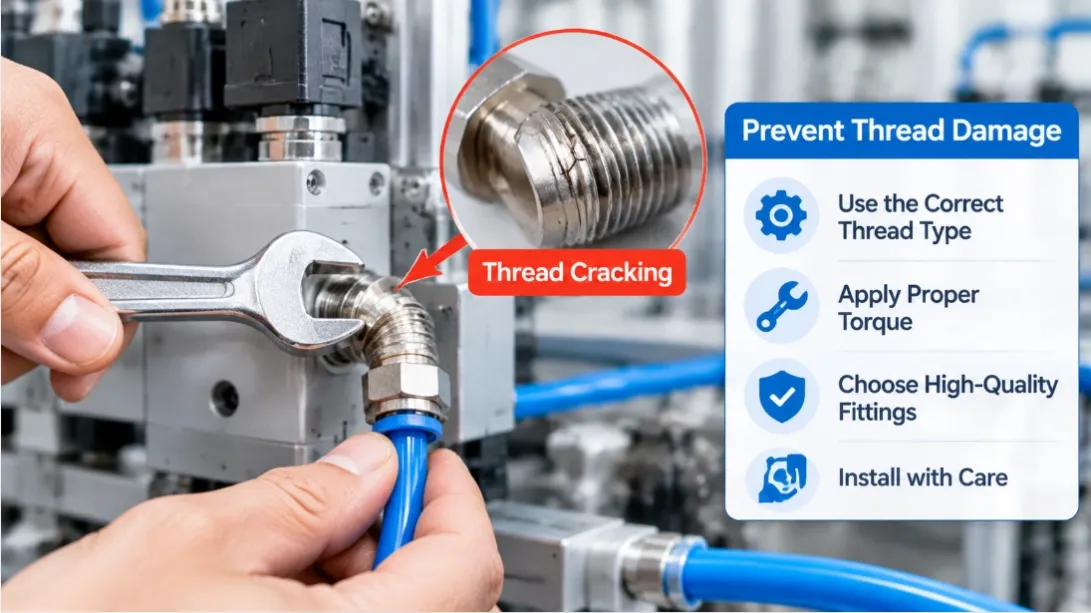
Why Pneumatic Fitting Threads Crack During Installation
Thread damage is one of the most common problems encountered when installing pneumatic fittings. A cracked or damaged thread can cause air leakage, poor sealing, and even permanent damage to equipment ports. In many cases, people assume the fitting is defective, but the real reason is often incorrect installation.
Understanding why pneumatic fitting threads crack can help installers avoid unnecessary failures and improve the reliability of compressed air systems.
1. Overtightening the Fitting
Applying too much torque is the leading cause of thread cracking.
Many installers believe that tightening a fitting harder will create a better seal. In reality, excessive force places unnecessary stress on both the fitting and the threaded port. Thin threaded sections can deform, while aluminum manifolds and valve bodies are especially vulnerable to cracking.
Plastic push-in fittings with metal threaded inserts are also at risk if excessive force is used during installation.
Solution: Tighten the fitting only to the recommended torque. A secure connection does not require excessive force.
2. Using the Wrong Thread Type
Not all pneumatic threads are the same.
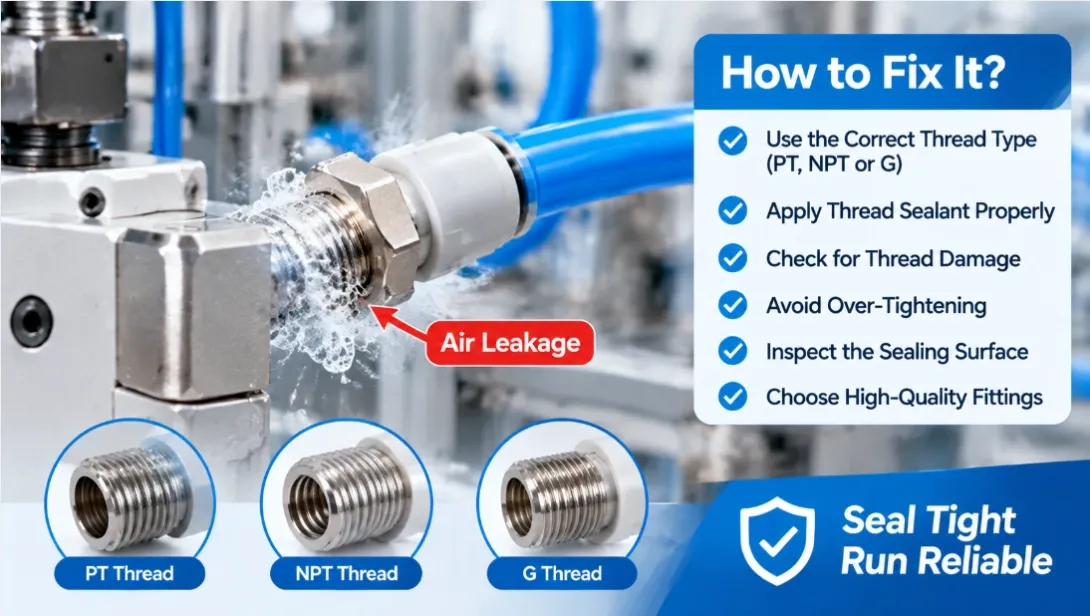
PT, NPT, and G threads have different dimensions and sealing methods. Although PT and NPT threads appear similar, they have different thread angles and pitches. Forcing incompatible threads together can damage both components during installation.
A damaged thread often begins with small cracks that become worse after repeated pressure cycles.
Solution: Always verify the thread standard before installation and use matching fittings.
3. Poor Thread Quality
The quality of the thread itself plays a major role in installation reliability.
Low-quality fittings may have rough machining, inaccurate thread profiles, or insufficient thread thickness. These defects create uneven stress when the fitting is tightened, increasing the chance of cracking.
Higher-quality pneumatic fittings use precision-machined threads with better dimensional consistency, allowing the load to be distributed more evenly.
4. Insufficient Thread Thickness
Thread strength depends on more than material alone.
If the threaded section is too thin, it may not withstand normal installation torque. Under repeated tightening or high operating pressure, the thread can deform or crack.
This is one reason why many industrial users prefer fittings with thicker threaded sections. The additional material improves mechanical strength and reduces the risk of installation damage.
5. Cross-Threading During Installation
Cross-threading happens when a fitting is installed at an incorrect angle.
Instead of engaging smoothly, the threads cut into each other. This damages the thread profile immediately and weakens the connection.
Once cross-threading occurs, tightening the fitting further usually makes the damage worse.
Solution: Start threading by hand before using a wrench. If resistance is felt immediately, remove the fitting and realign it.
6. Excessive Thread Sealant
Thread sealant is important, but more is not always better.
Applying too much PTFE tape or thread sealant can increase installation resistance. Installers often apply additional force to overcome this resistance, placing unnecessary stress on the threaded connection.
Loose sealant may also enter the pneumatic system and affect valves or other precision components.
Use only the amount of sealant recommended for the specific thread type.
7. Low-Strength Materials
The material used in the threaded section also affects durability.
Fittings made from inferior materials may crack more easily during installation or under continuous vibration.
Quality pneumatic fittings typically use precision-machined brass or reinforced metal threaded inserts, providing higher strength and better resistance to repeated assembly.
How to Prevent Thread Cracking
Preventing thread damage is much easier than repairing it.
Follow these simple practices:
- Confirm the correct PT, NPT, or G thread specification.
- Start threading by hand before tightening.
- Use the proper installation torque.
- Apply thread sealant correctly.
- Avoid forcing mismatched threads together.
- Choose fittings with precision-machined, thicker threaded sections.
- Inspect threads before every installation.
Conclusion
Cracked pneumatic fitting threads are usually the result of installation mistakes rather than product failure. Overtightening, incompatible thread types, cross-threading, poor machining, and thin threaded sections are the most common causes.
By selecting high-quality pneumatic fittings and following correct installation procedures, you can prevent thread damage, reduce air leakage, and improve the long-term reliability of your compressed air system. Paying attention to these small details during installation helps avoid costly repairs and unnecessary downtime in industrial applications.