Aug 16, 2026pneumatic cylinder
How to Extend the Service Life of a Pneumatic Cylinder
Extending the service life of a pneumatic cylinder requires more than choosing a high-quality product.
How to Extend the Service Life of a Pneumatic Cylinder
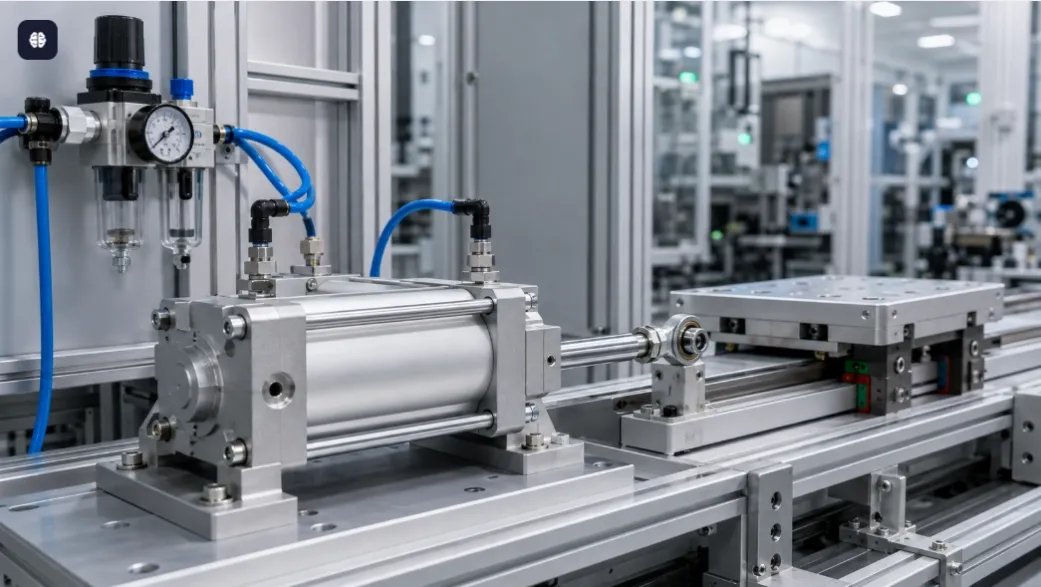
Pneumatic cylinders are widely used in packaging machinery, assembly equipment, material-handling systems, robotics, and other industrial automation applications. Although they are generally reliable and easy to maintain, their actual service life depends heavily on air quality, installation accuracy, operating conditions, and maintenance practices.
Premature cylinder failure can cause air leakage, unstable movement, reduced production efficiency, and unexpected machine downtime. Fortunately, most of these problems can be prevented. This article explains how to extend the service life of a pneumatic cylinder and maintain reliable performance throughout its operating cycle.
1. Select the Correct Pneumatic Cylinder
Extending cylinder life begins with selecting the right model for the application. A cylinder that is too small may need to operate continuously near its maximum capacity, accelerating wear on the piston, seals, rod, and bearings.
Important selection factors include:
- Required thrust and return force
- Operating pressure
- Bore diameter
- Stroke length
- Mounting method
- Operating speed
- Load weight and direction
- Working frequency
- Ambient temperature
- Exposure to dust, moisture, chemicals, or corrosive substances
The theoretical cylinder force can be estimated using the following formula:
Force = Air Pressure × Effective Piston Area
However, a safety factor should always be included. In most applications, the cylinder should not operate continuously at its theoretical maximum output. Friction, pressure fluctuations, load changes, and mechanical resistance must also be considered.
Selecting a cylinder with an appropriate safety margin reduces stress and improves long-term reliability.
2. Maintain Clean and Dry Compressed Air
Contaminated compressed air is one of the most common causes of pneumatic cylinder failure. Dust, rust particles, water, compressor oil, and other contaminants can enter the cylinder and damage its internal components.
Contamination may cause:
- Premature seal wear
- Scratches on the cylinder barrel
- Piston rod corrosion
- Increased internal friction
- Air leakage
- Unstable cylinder movement
An appropriately sized air preparation system should be installed upstream of the cylinder. This normally includes a filter and pressure regulator. A lubricator may also be used when required by the cylinder design or operating conditions.
The air filter must be checked and drained regularly. In humid working environments, an air dryer or additional moisture separator may be necessary.
Clean, dry compressed air is one of the most effective ways to extend pneumatic cylinder life.
3. Use the Correct Operating Pressure
Excessive air pressure does not necessarily improve cylinder performance. It can increase impact force, accelerate seal wear, and place unnecessary stress on the cylinder body and mounting components.
The operating pressure should remain within the range recommended by the manufacturer. The pressure regulator should also be adjusted according to the actual force required by the application.
Pressure that is too low may cause incomplete movement, sticking, or unstable operation. Pressure that is too high may result in:
- Hard impact at the end of the stroke
- Increased air consumption
- Faster seal deterioration
- Damage to mounting brackets
- Excessive vibration and noise
The best practice is to use the lowest stable pressure that can safely perform the required work.
4. Ensure Correct Installation and Alignment
Incorrect installation is another major cause of shortened cylinder life. The piston rod should move in a straight line without being forced sideways.
Misalignment between the cylinder and the driven mechanism creates side loading on the piston rod and rod bearing. This may lead to:
- Uneven seal wear
- Bent piston rods
- Rod surface scratches
- Increased friction
- Air leakage
- Bearing damage
Before operation, confirm that the cylinder, mounting bracket, and load are properly aligned. All mounting bolts should be tightened securely without distorting the cylinder body.
If perfect alignment cannot be guaranteed, a floating joint, rod-end bearing, or other alignment-compensation component should be considered.
The piston rod should transmit axial force whenever possible. It should not be used as a guide for an unsupported load.
5. Avoid Excessive Side Load
Standard pneumatic cylinders are mainly designed to provide linear push-and-pull force. They are not intended to support heavy radial or side loads.
Side loading can occur when:
- The workpiece is not properly guided
- The mounting position is inaccurate
- A long stroke is combined with a heavy load
- The piston rod is connected rigidly to a misaligned mechanism
- The cylinder is used to carry a load directly
For applications involving significant lateral force, an external guide mechanism, guided cylinder, slide cylinder, or linear bearing should be used.
Removing side load from the piston rod can significantly reduce wear on the rod seal and bearing.
6. Control Cylinder Speed
Operating a cylinder at excessive speed increases impact, vibration, and internal wear. High-speed movement can also reduce positioning stability and damage the connected equipment.
Cylinder speed should be controlled with suitable flow-control valves. In most applications, meter-out control provides smoother and more stable movement because it regulates the exhaust airflow.
Speed controllers should be adjusted gradually. If the cylinder still moves too quickly, check whether the valve and tubing are oversized or whether the load is helping to accelerate the piston.
Smooth, controlled movement is generally more important than achieving the highest possible speed.
7. Reduce End-of-Stroke Impact
When a piston reaches the end of its stroke at high speed, it creates a strong mechanical impact. Repeated impact can damage the piston, seals, end covers, mounting brackets, and connected components.
To reduce this impact:
- Adjust the cylinder’s built-in cushioning system
- Use external shock absorbers when necessary
- Reduce operating speed near the end of the stroke
- Avoid allowing heavy loads to stop directly against the cylinder
- Use a cylinder with sufficient cushioning capacity
Adjustable air cushioning is useful for medium- and high-speed applications. However, it must be set correctly. Too little cushioning causes hard impact, while excessive cushioning may cause slow movement or incomplete strokes.
For heavy loads or high-energy applications, industrial shock absorbers may provide better protection than air cushioning alone.
8. Use Suitable Tubing and Pneumatic Fittings
Tubing and fittings directly affect cylinder performance. Components that are too small may restrict airflow, reduce cylinder speed, and create unstable pressure. Poor-quality fittings may also leak and introduce contaminants into the system.
When selecting tubing and fittings, consider:
- Cylinder bore and stroke
- Required operating speed
- Airflow demand
- Working pressure
- Tube length
- Thread standard
- Environmental conditions
All pneumatic fittings should be installed correctly and checked for leakage. Thread sealant or sealing tape should be applied carefully to prevent excess material from entering the air circuit.
Reliable tubing and fittings help maintain stable pressure and reduce unnecessary stress on the cylinder.
9. Follow the Manufacturer’s Lubrication Requirements
Many modern pneumatic cylinders are pre-lubricated and can operate without additional oil under normal conditions. Adding unnecessary or incompatible lubricant may damage the seals or remove the original grease.
If external lubrication is required, use a pneumatic lubricant recommended by the manufacturer. Once an air-line lubricator is introduced, lubrication should normally remain continuous because the added oil may gradually wash away the factory-applied grease.
Avoid mixing different types of lubricants without confirming their compatibility.
High-quality grease and wear-resistant seals can considerably improve cylinder durability, especially in high-frequency applications.
10. Protect the Piston Rod
The piston rod is one of the cylinder’s most exposed components. Dust, metal particles, welding spatter, chemicals, and moisture can damage its surface.
A scratched, corroded, or contaminated piston rod can quickly wear out the rod seal and cause external air leakage.
To protect the piston rod:
- Keep the rod surface clean
- Avoid striking or scratching it during installation
- Use a rod boot or protective cover in dusty environments
- Install a scraper or special seal when necessary
- Select corrosion-resistant rod material for wet or chemical environments
- Keep welding spatter and cutting debris away from the cylinder
Do not use abrasive tools to clean the rod. A soft, lint-free cloth is generally more suitable.
11. Prevent Abnormal Loads and Mechanical Interference
A pneumatic cylinder should never be forced to move against a blocked mechanism. If the driven component jams, the cylinder may remain pressurized while unable to complete its stroke.
This can generate excessive mechanical stress and cause:
- Bent rods
- Damaged brackets
- Loose connections
- Premature seal failure
- Overheating from continuous cycling
- Unexpected movement after the obstruction is removed
Machine designers should include sensors, pressure monitoring, overload protection, or control logic to detect incomplete strokes and abnormal resistance.
Mechanical stops should be positioned so that the cylinder does not absorb all of the load energy.
12. Inspect the Cylinder Regularly
Preventive inspection can identify small problems before they result in complete failure. Inspection frequency should be based on the operating environment, cycle rate, and importance of the equipment.
Check the following items regularly:
- External air leakage
- Cylinder speed and smoothness
- Piston rod condition
- Mounting bolt tightness
- Alignment of the rod and load
- Tube and fitting condition
- Abnormal noise or vibration
- Cushioning performance
- Filter contamination and condensate level
- Pressure stability
A simple air-leak test can be performed with an approved leak-detection solution. Open flames must never be used to locate pneumatic leaks.
Maintenance records should include inspection dates, operating cycles, failure symptoms, and replaced components. These records help identify recurring problems and improve future maintenance planning.
13. Replace Worn Seals Before Major Failure
Seals are consumable components. Their service life depends on air quality, pressure, temperature, speed, lubrication, and operating frequency.
Common signs of seal wear include:
- Air leakage around the piston rod
- Internal bypass leakage
- Reduced output force
- Irregular or jerky movement
- Inability to hold a position
- Increased air consumption
When seal wear is detected, the cylinder should be repaired using a compatible seal kit. Before installing new seals, inspect the barrel, piston rod, and guide surfaces. New seals will fail quickly if they are installed in a cylinder with a scratched rod or damaged bore.
During reassembly, use the specified lubricant and avoid damaging the seal lips with sharp tools or threaded surfaces.
14. Choose a Cylinder Suitable for the Environment
Standard pneumatic cylinders may not be suitable for every operating environment. Special materials and designs may be required for:
- Food-processing equipment
- High-temperature applications
- Low-temperature environments
- Outdoor machinery
- Chemical processing
- Washdown areas
- Dusty production lines
- Corrosive or marine environments
Depending on the application, suitable options may include stainless-steel piston rods, corrosion-resistant barrels, high-temperature seals, low-temperature grease, protective rod boots, scraper rings, or washdown-resistant construction.
Selecting the correct cylinder specification is more economical than repeatedly replacing a standard cylinder used in an unsuitable environment.
Common Causes of Premature Pneumatic Cylinder Failure
Cause | Typical Result | Recommended Solution |
Dirty or wet compressed air | Seal wear and barrel damage | Improve filtration and air drying |
Excessive operating pressure | Impact and accelerated wear | Adjust the regulator |
Incorrect alignment | Side load and rod damage | Realign the cylinder and use a floating joint |
Excessive speed | Hard impact and vibration | Install and adjust flow-control valves |
Inadequate cushioning | End-cover and piston damage | Adjust cushioning or add shock absorbers |
Damaged piston rod | External leakage | Protect or replace the rod |
Incorrect lubrication | Seal deterioration | Follow the manufacturer’s lubrication requirements |
Unsupported load | Rod and bearing wear | Add an external guide mechanism |
Unsuitable environment | Corrosion and seal failure | Select appropriate materials and protection |
Lack of inspection | Unexpected downtime | Establish a preventive maintenance schedule |
Recommended Preventive Maintenance Checklist
Daily or Weekly Checks
- Listen for abnormal air leakage.
- Observe cylinder speed and movement.
- Check for unusual noise or vibration.
- Drain water from the air filter when required.
- Inspect the exposed piston rod for contamination.
Monthly Checks
- Inspect tubing and pneumatic fittings.
- Check mounting bolts and brackets.
- Confirm that the cylinder remains properly aligned.
- Test the operation of sensors and switches.
- Verify pressure-regulator settings.
- Check the cushioning adjustment.
Periodic Overhaul
- Inspect the piston rod, barrel, bearings, and seals.
- Replace worn seals using the correct repair kit.
- Clean internal components carefully.
- Apply the specified lubricant.
- Replace damaged mounting or connection components.
- Test the cylinder for leakage and smooth operation before returning it to service.
The actual maintenance interval should be determined by operating cycles and application conditions rather than time alone.
Conclusion
Extending the service life of a pneumatic cylinder requires more than choosing a high-quality product. Correct sizing, clean compressed air, accurate alignment, controlled speed, suitable cushioning, and regular inspection all contribute to reliable long-term operation.
The most important practices are to prevent contamination, avoid side loads, maintain appropriate pressure, protect the piston rod, and correct small leaks or alignment problems before they cause serious damage.
A properly selected and maintained pneumatic cylinder can operate reliably for millions of cycles, reduce unplanned downtime, lower compressed-air consumption, and improve the overall efficiency of an automation system.