Oct 13, 2026pneumatic fittings
Brass Fittings vs Plastic Fittings: Which One Is Right for Your Pneumatic System?
Selecting the correct fitting should always be based on operating pressure, environmental conditions, installation requirements, and expected service life.
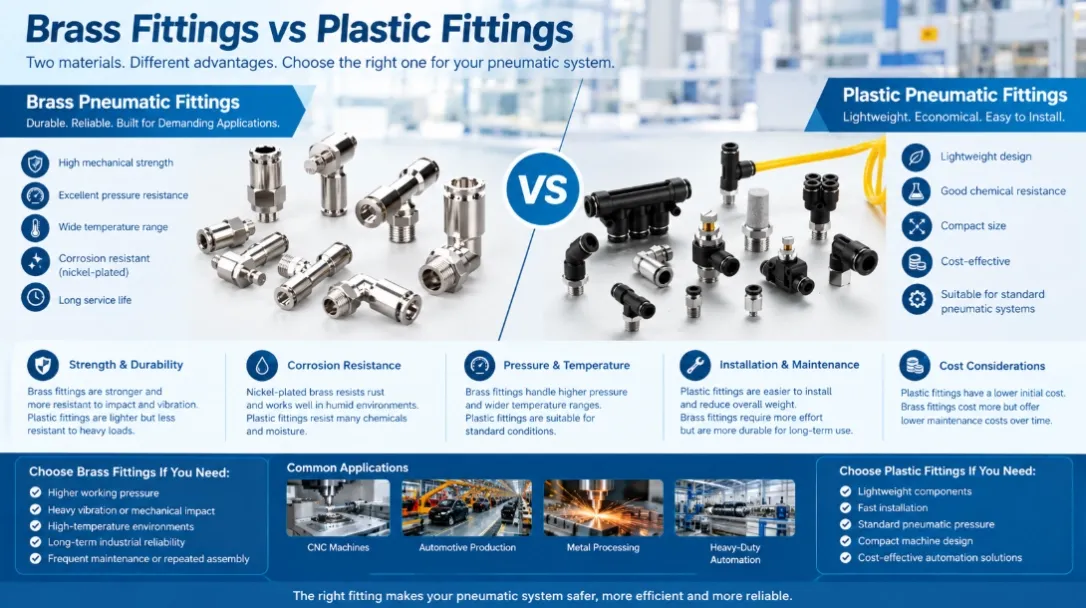
Brass Fittings vs Plastic Fittings: Which One Is Right for Your Pneumatic System?
When selecting pneumatic fittings, one of the most common questions is whether to use brass fittings or plastic fittings. Both are widely used in industrial automation, but they are designed for different working conditions. The right choice depends on factors such as pressure, temperature, installation environment, and machine requirements.
This guide compares brass and plastic pneumatic fittings to help engineers, machine builders, and purchasing professionals make the right decision.
What Are Brass Pneumatic Fittings?
Brass pneumatic fittings are usually manufactured from high-quality brass and are often nickel-plated to improve corrosion resistance and surface durability. They are known for their strength, long service life, and excellent sealing performance.
Brass fittings are commonly used in demanding industrial environments where pressure, vibration, or temperature may exceed the limits of plastic fittings.
Typical applications include CNC machines, automotive production lines, metal processing equipment, and heavy-duty automation systems.
What Are Plastic Pneumatic Fittings?
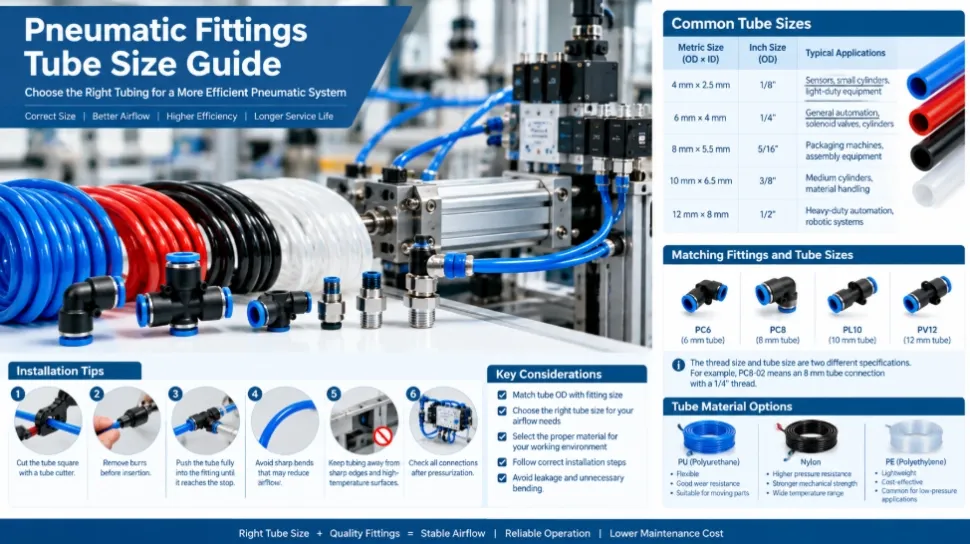
Plastic pneumatic fittings typically feature a durable engineering plastic body combined with a brass or nickel-plated brass threaded insert. They are lightweight, economical, and easy to install.
Plastic fittings are widely used in packaging machinery, textile equipment, food processing lines, electronics manufacturing, and other applications where compact size and fast installation are important.
Modern high-quality plastic fittings provide reliable performance for most standard pneumatic systems.
Strength and Durability
One of the biggest differences between the two materials is mechanical strength.
Brass fittings can withstand higher tightening torque and are more resistant to impact, vibration, and repeated assembly. They are less likely to crack under harsh working conditions.
Plastic fittings are lighter but more sensitive to excessive force during installation. Over-tightening or heavy external loads may damage the fitting body.
For machines operating continuously or in demanding industrial environments, brass fittings generally offer a longer service life.
Corrosion Resistance
Both materials offer good corrosion resistance, but in different ways.
Nickel-plated brass fittings perform well in humid industrial environments and resist rust while maintaining excellent mechanical strength.
Plastic fittings naturally resist many chemicals and moisture, making them suitable for clean production areas and applications where lightweight components are preferred.
For outdoor installations or aggressive chemical environments, material compatibility should always be checked before selection.
Pressure and Temperature Performance
Brass fittings generally tolerate higher working pressures and wider temperature ranges than plastic fittings.
When pneumatic systems operate at elevated temperatures or under continuous heavy-duty cycles, brass fittings provide greater stability and reliability.
Plastic fittings perform very well under normal factory conditions but may have lower temperature limits depending on the material used.
Always refer to the manufacturer's pressure and temperature specifications before installation.
Installation and Maintenance
Plastic fittings are easy to install because of their lightweight design. They reduce the overall weight of pneumatic systems and are convenient for machines with limited installation space.
Brass fittings require slightly more installation effort but are more resistant to repeated maintenance and tube replacement.
Regardless of the material, always use clean, square-cut tubing and avoid excessive tightening torque.
Cost Considerations
Plastic fittings usually have a lower initial purchase cost, making them a popular option for standard automation equipment and large-volume production.
Brass fittings generally cost more, but their durability often reduces maintenance costs and replacement frequency over the long term.
For many industrial users, the total cost of ownership is more important than the initial price.
Which One Should You Choose?
Choose brass pneumatic fittings if your application requires:
- Higher working pressure
- Heavy vibration or mechanical impact
- High-temperature environments
- Long-term industrial reliability
- Frequent maintenance or repeated assembly
Choose plastic pneumatic fittings if your application requires:
- Lightweight components
- Fast installation
- Standard pneumatic pressure
- Compact machine design
- Cost-effective automation solutions
Conclusion
Both brass and plastic pneumatic fittings have their advantages. Brass fittings provide outstanding strength, durability, and reliability for demanding industrial applications, while plastic fittings offer an economical, lightweight solution for general automation equipment. Selecting the correct fitting should always be based on operating pressure, environmental conditions, installation requirements, and expected service life. By matching the fitting material to the application, manufacturers can improve system reliability, reduce maintenance, and achieve long-term operating efficiency.