Oct 15, 2026pneumatic fittings
Why Do Pneumatic Fittings Leak? Common Causes and Solutions
Most pneumatic fitting leaks are caused by installation errors, worn seals, poor-quality tubing, incorrect thread sealing, or low-quality fittings.
Why Do Pneumatic Fittings Leak? Common Causes and Solutions
Air leaks are one of the most common problems in pneumatic systems. Even a small leak can reduce system pressure, increase energy consumption, slow down machine performance, and shorten the life of pneumatic components. In many factories, air leakage accounts for a significant portion of wasted compressed air, leading to higher operating costs over time.
Fortunately, most fitting leaks are preventable. Understanding the common causes and applying the right installation practices can help keep your pneumatic system running efficiently.
Why Air Leaks Matter
Compressed air is expensive to produce. When air escapes through leaking fittings, the compressor has to run longer to maintain system pressure. This not only increases electricity costs but also places additional wear on compressors, valves, cylinders, and other pneumatic components.
A properly sealed fitting improves machine reliability, reduces maintenance, and extends equipment life.
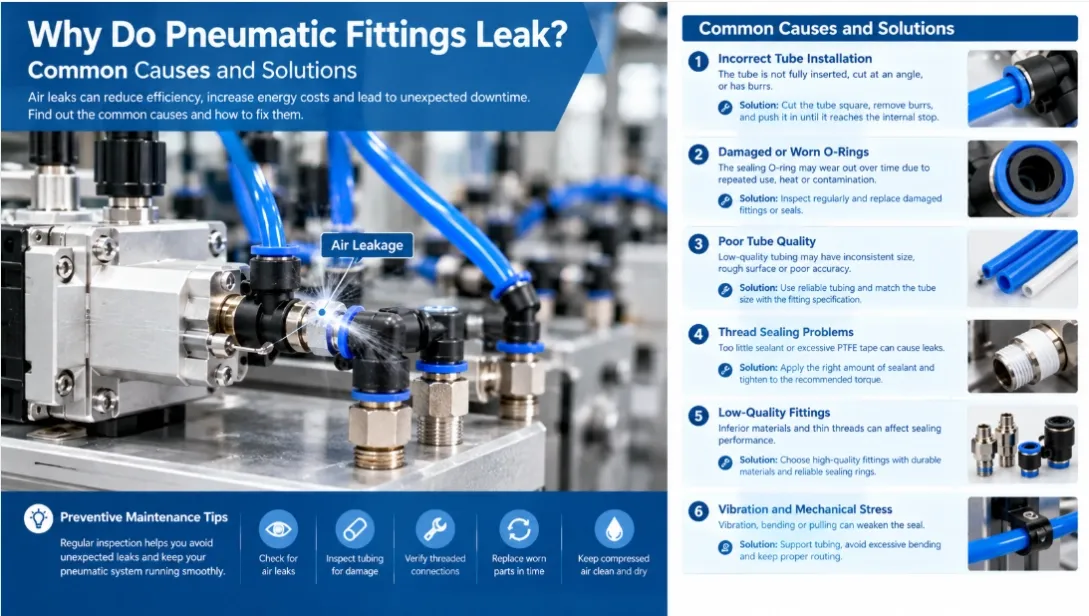
Common Cause 1: Incorrect Tube Installation
One of the most frequent causes of leakage is improper tube installation.
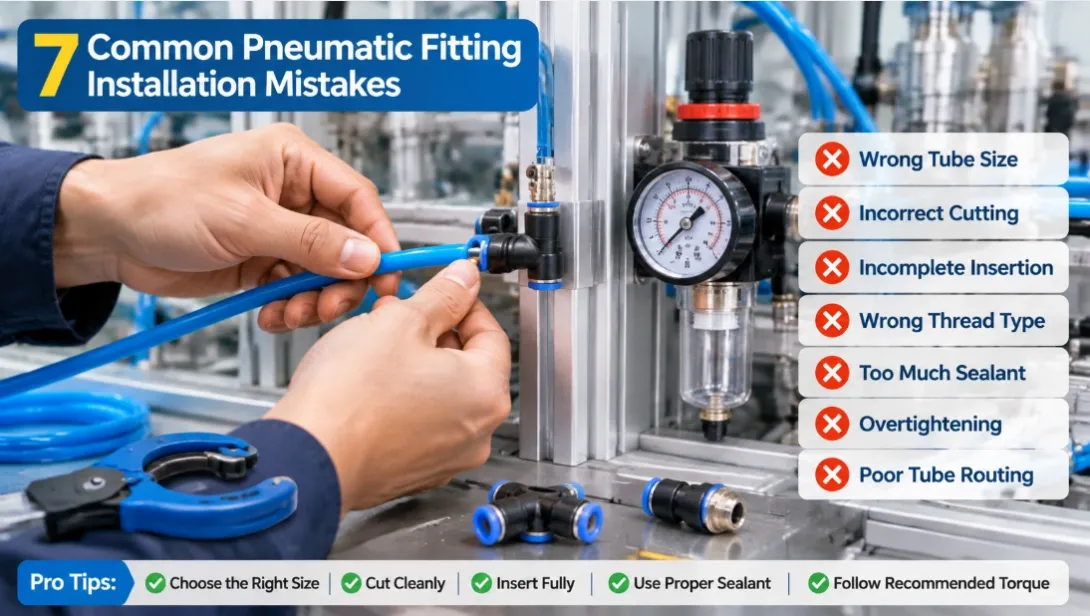
If the tube is not inserted fully into the push-in fitting, the internal seal cannot grip the tube correctly. Likewise, if the tube end is cut at an angle or has burrs, the O-ring cannot form a complete seal.
Solution:
- Cut the tube with a dedicated tube cutter.
- Ensure the tube end is perfectly square.
- Remove any burrs before installation.
- Push the tube firmly into the fitting until it reaches the internal stop.
A properly installed tube creates a reliable seal without excessive force.
Common Cause 2: Damaged or Worn O-Rings
The sealing O-ring inside the fitting is responsible for preventing air leakage. Over time, repeated tube removal, aging, high temperatures, or contamination may cause the seal to wear out.
A damaged O-ring often leads to slow, continuous air leakage around the tube connection.
Solution:
Inspect fittings during routine maintenance. Replace damaged fittings or worn seals immediately instead of attempting temporary repairs.
Using high-quality fittings with wear-resistant sealing materials can significantly improve service life.
Common Cause 3: Poor Tube Quality
Not all pneumatic tubing is manufactured to the same standard.
Low-quality tubing may have inconsistent outside diameters, rough surfaces, or poor dimensional accuracy. Even if the fitting is manufactured correctly, it may not seal properly against an undersized or oversized tube.
Solution:
Choose tubing from reliable manufacturers and always match the tube size to the fitting specification.
For example:
- 6 mm fitting → 6 mm tube
- 8 mm fitting → 8 mm tube
- 10 mm fitting → 10 mm tube
Mixing metric and inch tubing is a common cause of leakage.
Common Cause 4: Thread Sealing Problems
Leaks do not always occur at the tube connection. Threaded connections can also leak if they are installed incorrectly.
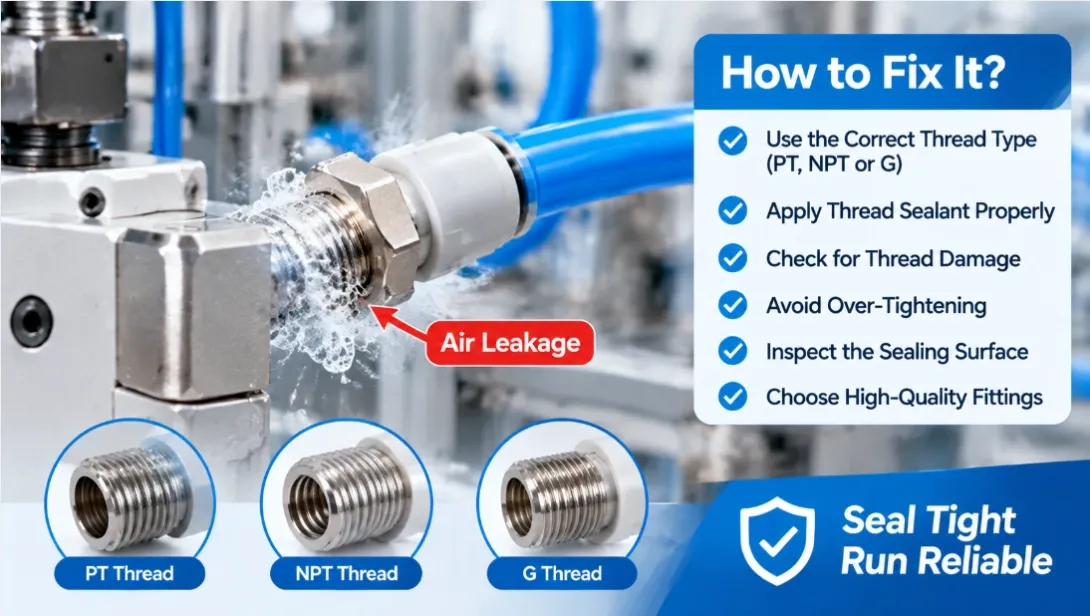
Applying too little thread sealant allows air to escape, while using excessive PTFE tape may damage threads or contaminate valves.
Solution:
Apply the correct amount of thread sealant or PTFE tape according to the thread type. Tighten fittings using the recommended torque without over-tightening.
Choosing the correct thread standard—such as PT, NPT, or G—is equally important.
Common Cause 5: Low-Quality Fittings
The quality of the fitting itself has a direct impact on sealing performance.
Low-cost fittings often use inferior plastic materials, thinner threaded sections, or low-grade sealing rings. These fittings may crack under pressure or lose sealing performance after repeated use.
High-quality pneumatic fittings typically feature:
- Precision-machined brass threaded inserts
- Durable engineering plastic bodies
- Wear-resistant sealing rings
- Thickened threaded sections for greater strength
- Stable locking mechanisms for repeated tube insertion
Although premium fittings may cost slightly more, they often reduce maintenance costs over the long term.
Common Cause 6: Vibration and Mechanical Stress
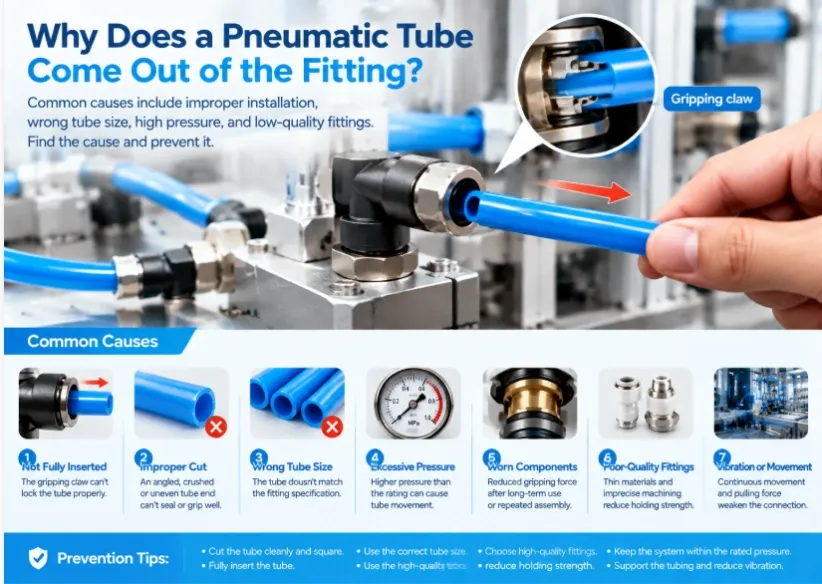
Machines that operate continuously may generate vibration, causing tubes to move repeatedly inside the fitting. Excessive bending or pulling can eventually weaken the seal.
Solution:
Support long tubing runs with clamps, avoid excessive bending near the fitting, and ensure tubing is routed without unnecessary tension.
Proper installation greatly improves long-term reliability.
Preventive Maintenance Tips
Regular inspection is the best way to prevent unexpected air leaks.
A simple maintenance routine should include:
- Check fittings for audible air leaks.
- Inspect tubing for scratches, cracks, or deformation.
- Verify that threaded connections remain tight.
- Replace damaged fittings before failure occurs.
- Keep compressed air clean and dry by maintaining air preparation units.
Preventive maintenance is far less expensive than emergency machine downtime.
Conclusion
Most pneumatic fitting leaks are caused by installation errors, worn seals, poor-quality tubing, incorrect thread sealing, or low-quality fittings. By using precision-manufactured components, matching the correct tube size, and following proper installation procedures, manufacturers can greatly reduce compressed air loss and improve system efficiency. Investing in reliable pneumatic fittings not only minimizes maintenance costs but also helps keep production running smoothly for years.