
pneumatic fittings

Why Brass Internal Components Improve Pneumatic Fitting Reliability

Brass internal components strengthen threads, improve sealing stability, resist corrosion, and ensure reliable, long-lasting pneumatic fitting performance in industrial applications.
1bda71f7-3253-47f9-b20c-d680fd73c74e
Why Brass Internal Components Improve Pneumatic Fitting Reliability
When selecting pneumatic fittings, buyers often compare thread type, tube size, and pressure rating. However, one detail that has a major impact on long-term performance is hidden inside the fitting—the internal brass components.
Although they are not visible after installation, these parts are responsible for maintaining a secure tube connection, reliable sealing, and stable performance under continuous operation. High-quality brass inserts can significantly improve the durability and reliability of a pneumatic fitting.

What Are the Internal Brass Components?

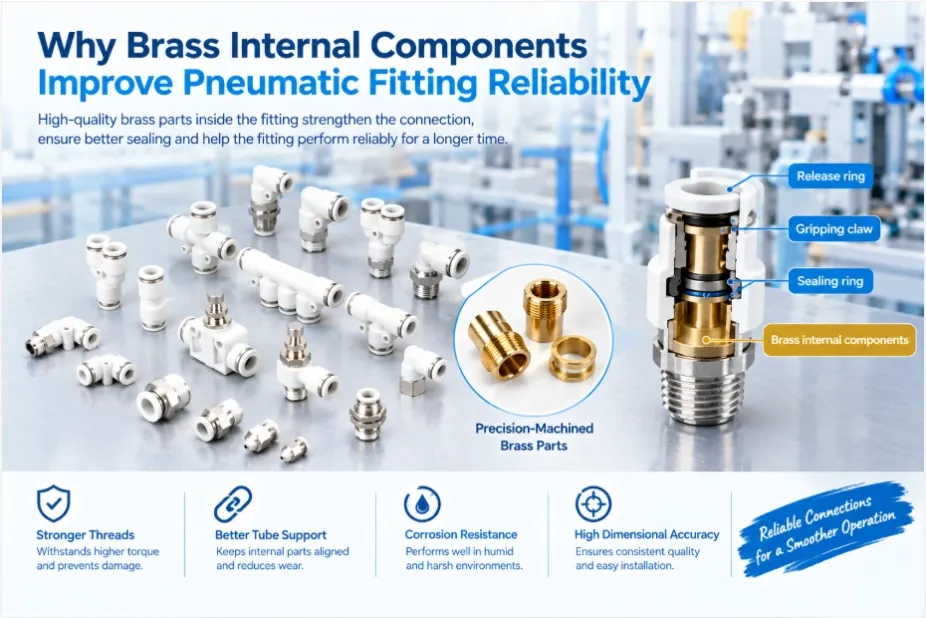
A standard push-in pneumatic fitting is made up of several parts, including the plastic body or release ring, stainless steel gripping claw, sealing ring, and one or more brass components.
Depending on the fitting design, the brass parts may include the threaded insert, internal sleeve, support ring, or tube guide. These components reinforce the fitting and help distribute mechanical stress during installation and operation.
Because brass combines high strength with excellent machinability, it has become one of the most widely used materials in pneumatic fittings.

Stronger Threads, More Reliable Connections

One of the biggest advantages of brass is its mechanical strength.
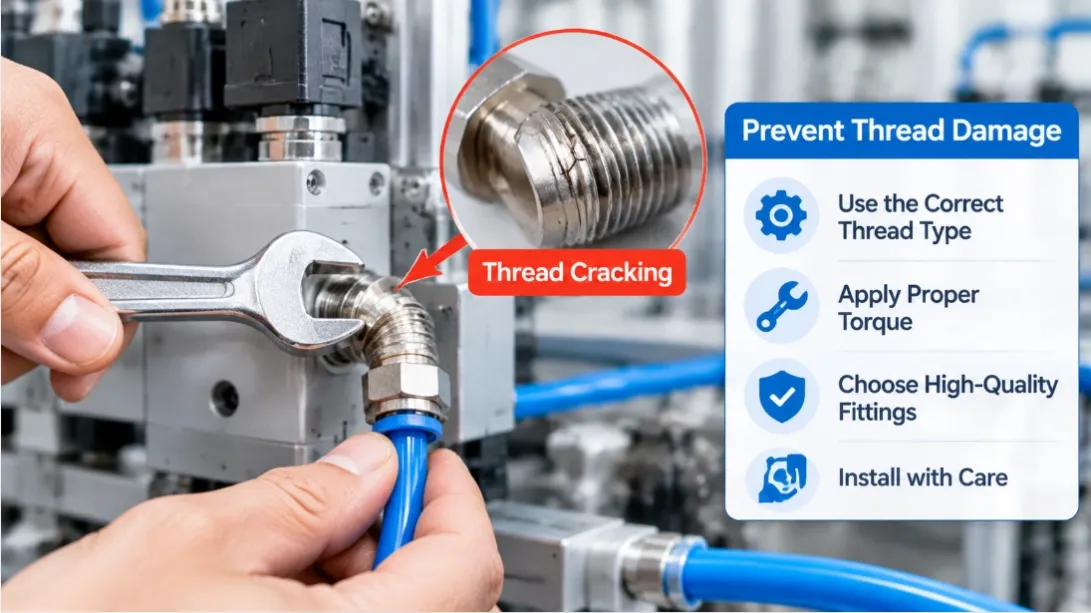
When a fitting is repeatedly tightened or removed, the threaded section experiences considerable force. If the internal support is weak, the fitting body may deform, causing thread damage or air leakage.
A precision-machined brass insert provides a solid foundation for the threaded connection. It keeps the thread stable, improves tightening torque, and reduces the risk of cracking during installation.
For equipment manufacturers who assemble hundreds or even thousands of fittings every month, this added strength makes a noticeable difference.

Better Tube Support

The tube connection is another area where brass plays an important role.
Inside a push-in fitting, the tube is held by a stainless steel gripping claw while the sealing ring prevents compressed air from escaping. Brass components help keep these internal parts correctly aligned.
Without adequate support, the tube may shift slightly under pressure or vibration, placing additional stress on the seal. Over time, this movement can lead to premature wear and small air leaks.
Brass reinforcement keeps the internal structure rigid, allowing the gripping claw and sealing ring to work as designed.

Excellent Corrosion Resistance

Industrial pneumatic systems operate in many different environments, including humid workshops, packaging lines, food processing plants, and outdoor machinery.
Brass naturally offers excellent resistance to corrosion and oxidation. When combined with high-quality nickel plating on external threaded sections, it provides long-lasting protection against moisture and general industrial conditions.
This helps extend the service life of the fitting while maintaining reliable sealing performance.

Improved Dimensional Accuracy

Reliable pneumatic fittings depend on precise manufacturing.
Brass can be machined to very tight tolerances, allowing manufacturers to produce consistent internal dimensions from one production batch to another.
Accurate machining ensures proper alignment between the tube, gripping claw, sealing ring, and threaded connection. Better dimensional consistency also reduces assembly problems and improves product interchangeability.
For distributors and OEM customers, this consistency means fewer installation issues and more dependable product quality.

Why Material Quality Matters

Not all brass components are manufactured to the same standard.
Some low-cost fittings reduce production costs by using thin brass inserts or lower-quality materials. While these products may look similar from the outside, their long-term durability is often compromised.
High-quality pneumatic fittings typically use thicker brass inserts, precision machining, and strict quality inspections. Combined with durable engineering plastics, stainless steel gripping claws, and high-quality sealing rings, these details greatly improve overall reliability.

Choosing a Reliable Pneumatic Fitting

When evaluating pneumatic fittings, buyers should look beyond appearance and price. Internal construction is just as important as external design.
Features such as precision-machined brass components, thicker threaded sections, virgin engineering plastic, durable sealing rings, and quality-controlled manufacturing all contribute to longer service life and fewer maintenance problems.
Although these improvements may slightly increase the initial purchase cost, they usually reduce downtime, replacement frequency, and maintenance expenses over the life of the equipment.

Conclusion

The internal brass components of a pneumatic fitting may be hidden from view, but they are essential to the fitting's performance. They strengthen threaded connections, stabilize tube support, improve dimensional accuracy, resist corrosion, and help maintain reliable sealing.
For industrial automation systems where reliability matters, choosing pneumatic fittings with high-quality brass internal components is a practical investment that delivers better performance and lower operating costs over time.
Read next

pneumatic fittings

Why Brass Internal Components Improve Pneumatic Fitting Reliability

Brass internal components strengthen threads, improve sealing stability, resist corrosion, and ensure reliable, long-lasting pneumatic fitting performance in industrial applications.

1bda71f7-3253-47f9-b20c-d680fd73c74e
Why Brass Internal Components Improve Pneumatic Fitting Reliability
When selecting pneumatic fittings, buyers often compare thread type, tube size, and pressure rating. However, one detail that has a major impact on long-term performance is hidden inside the fitting—the internal brass components.
Although they are not visible after installation, these parts are responsible for maintaining a secure tube connection, reliable sealing, and stable performance under continuous operation. High-quality brass inserts can significantly improve the durability and reliability of a pneumatic fitting.

What Are the Internal Brass Components?

A standard push-in pneumatic fitting is made up of several parts, including the plastic body or release ring, stainless steel gripping claw, sealing ring, and one or more brass components.
Depending on the fitting design, the brass parts may include the threaded insert, internal sleeve, support ring, or tube guide. These components reinforce the fitting and help distribute mechanical stress during installation and operation.
Because brass combines high strength with excellent machinability, it has become one of the most widely used materials in pneumatic fittings.

Stronger Threads, More Reliable Connections

One of the biggest advantages of brass is its mechanical strength.
When a fitting is repeatedly tightened or removed, the threaded section experiences considerable force. If the internal support is weak, the fitting body may deform, causing thread damage or air leakage.
A precision-machined brass insert provides a solid foundation for the threaded connection. It keeps the thread stable, improves tightening torque, and reduces the risk of cracking during installation.
For equipment manufacturers who assemble hundreds or even thousands of fittings every month, this added strength makes a noticeable difference.

Better Tube Support

The tube connection is another area where brass plays an important role.
Inside a push-in fitting, the tube is held by a stainless steel gripping claw while the sealing ring prevents compressed air from escaping. Brass components help keep these internal parts correctly aligned.
Without adequate support, the tube may shift slightly under pressure or vibration, placing additional stress on the seal. Over time, this movement can lead to premature wear and small air leaks.
Brass reinforcement keeps the internal structure rigid, allowing the gripping claw and sealing ring to work as designed.

Excellent Corrosion Resistance

Industrial pneumatic systems operate in many different environments, including humid workshops, packaging lines, food processing plants, and outdoor machinery.
Brass naturally offers excellent resistance to corrosion and oxidation. When combined with high-quality nickel plating on external threaded sections, it provides long-lasting protection against moisture and general industrial conditions.
This helps extend the service life of the fitting while maintaining reliable sealing performance.

Improved Dimensional Accuracy

Reliable pneumatic fittings depend on precise manufacturing.
Brass can be machined to very tight tolerances, allowing manufacturers to produce consistent internal dimensions from one production batch to another.
Accurate machining ensures proper alignment between the tube, gripping claw, sealing ring, and threaded connection. Better dimensional consistency also reduces assembly problems and improves product interchangeability.
For distributors and OEM customers, this consistency means fewer installation issues and more dependable product quality.

Why Material Quality Matters

Not all brass components are manufactured to the same standard.
Some low-cost fittings reduce production costs by using thin brass inserts or lower-quality materials. While these products may look similar from the outside, their long-term durability is often compromised.
High-quality pneumatic fittings typically use thicker brass inserts, precision machining, and strict quality inspections. Combined with durable engineering plastics, stainless steel gripping claws, and high-quality sealing rings, these details greatly improve overall reliability.

Choosing a Reliable Pneumatic Fitting

When evaluating pneumatic fittings, buyers should look beyond appearance and price. Internal construction is just as important as external design.
Features such as precision-machined brass components, thicker threaded sections, virgin engineering plastic, durable sealing rings, and quality-controlled manufacturing all contribute to longer service life and fewer maintenance problems.
Although these improvements may slightly increase the initial purchase cost, they usually reduce downtime, replacement frequency, and maintenance expenses over the life of the equipment.

Conclusion

The internal brass components of a pneumatic fitting may be hidden from view, but they are essential to the fitting's performance. They strengthen threaded connections, stabilize tube support, improve dimensional accuracy, resist corrosion, and help maintain reliable sealing.
For industrial automation systems where reliability matters, choosing pneumatic fittings with high-quality brass internal components is a practical investment that delivers better performance and lower operating costs over time.


Recommended articles

Guides visitors may want next

Helpful guides, field notes, and stories for choosing with more context.