Aug 10, 2026pneumatic fittings

PT vs NPT vs G Thread: How to Choose the Right Pneumatic Fitting Thread

A Complete Guide to Pneumatic Fitting Thread Standards for Industrial Applications
b0de118f-f91c-4049-9dd1-98f559160e98

PT vs NPT vs G Thread: How to Choose the Right Pneumatic Fitting Thread

A Complete Guide to Pneumatic Fitting Thread Standards for Industrial Applications

Choosing the correct thread type is one of the most important steps when selecting pneumatic fittings for an industrial air system.
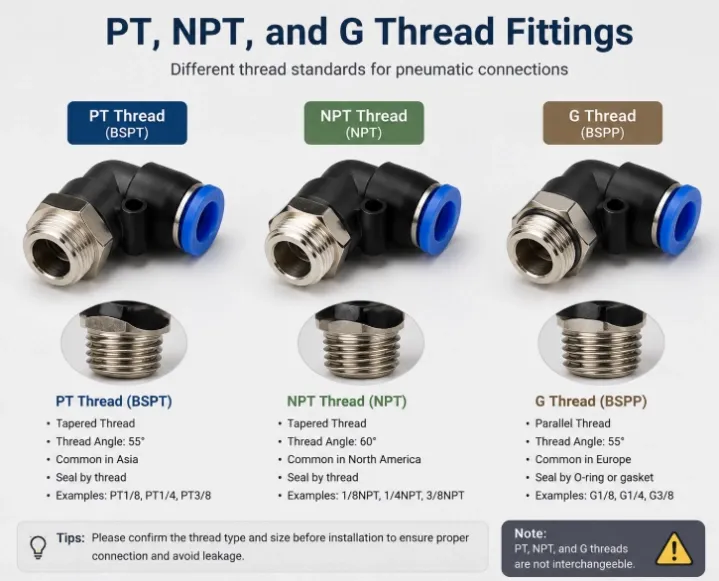
Although pneumatic fittings may look similar, different thread standards such as PT, NPT, and G thread are not interchangeable. Selecting the wrong thread type can lead to:
  • Air leakage
  • Poor sealing performance
  • Installation problems
  • Equipment downtime
  • Increased maintenance costs
For engineers, machine builders, and purchasing managers, understanding the differences between PT, NPT, and G threads is essential for building a reliable pneumatic system.
This guide explains the characteristics of each thread type and how to choose the right pneumatic fitting for your application.

1. Why Thread Standards Matter in Pneumatic Systems

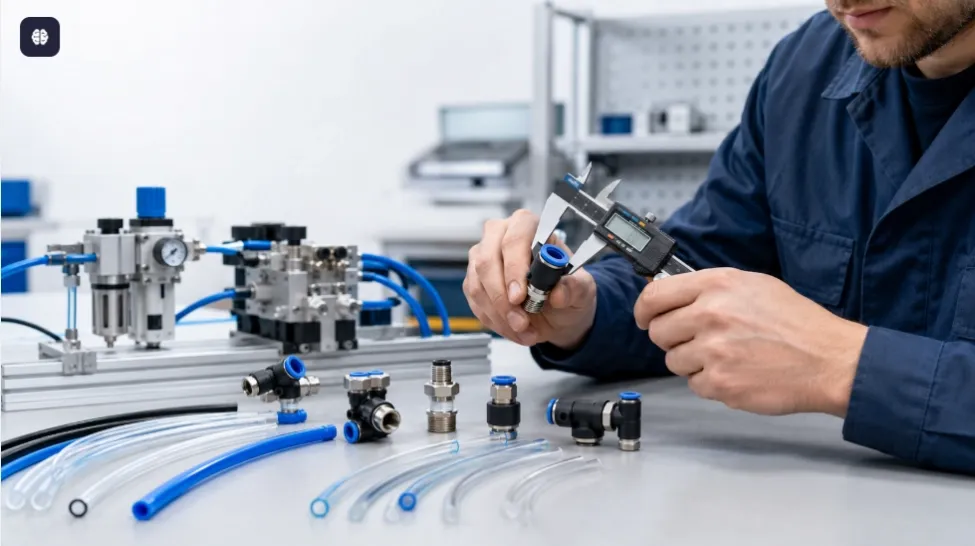
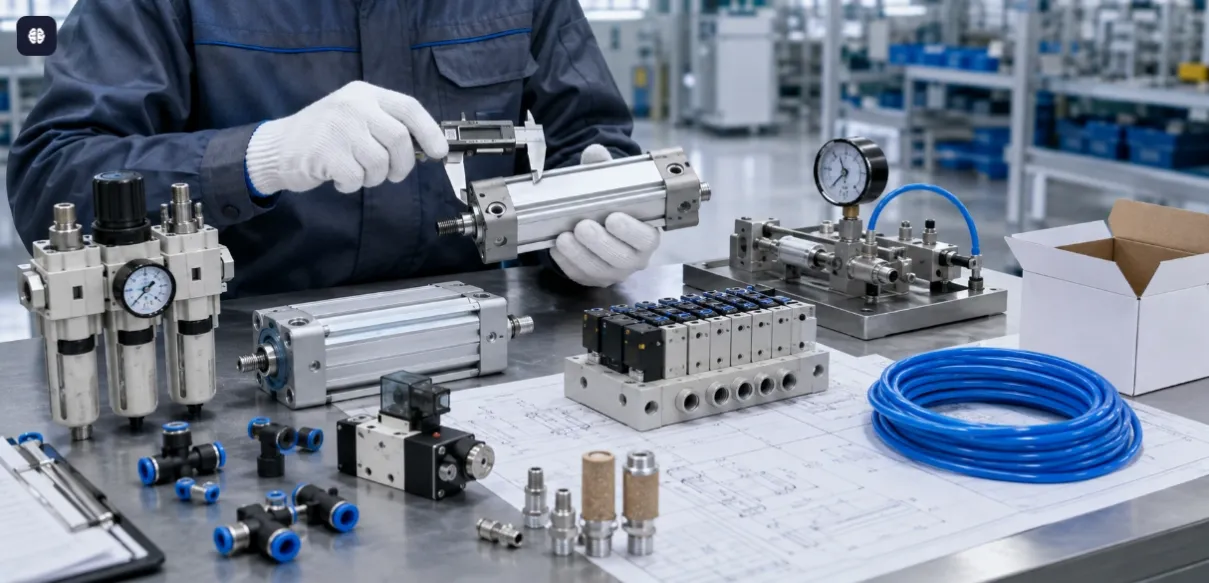
Pneumatic fittings connect components such as:
  • Pneumatic cylinders
  • Solenoid valves
  • Air preparation units
  • Manifolds
  • Tubes and hoses
A pneumatic system depends on stable compressed air pressure. Even a small sealing problem at a threaded connection can cause continuous air leakage.
The correct thread standard ensures:
  • Proper mechanical connection
  • Reliable air sealing
  • Easy installation
  • Long service life
Before purchasing pneumatic fittings, always confirm the thread standard used by your equipment.

2. What Is PT Thread?

PT Thread (BSPT / R Thread)

PT thread is a tapered pipe thread standard commonly used in Asian markets, especially in China, Japan, Korea, and other industrial regions.
PT is also known as:
  • BSPT (British Standard Pipe Taper)
  • R thread
The thread angle is 55 degrees, and both male and female threads are tapered.

Advantages of PT Pneumatic Fittings

PT threaded fittings provide:
✔ Good sealing performance ✔ Strong connection reliability ✔ Wide usage in industrial pneumatic equipment ✔ Easy availability in Asian markets
PT fittings are commonly used in:
  • Automation machinery
  • Packaging machines
  • Pneumatic control systems
  • General industrial equipment

Typical PT Applications

Examples:
  • PT1/8 pneumatic fittings
  • PT1/4 air fittings
  • PT3/8 pneumatic connectors
  • PT1/2 pneumatic components

3. What Is NPT Thread?

NPT Thread (National Pipe Thread)

NPT is a North American thread standard widely used in the United States, Canada, and some industrial markets.
NPT stands for:
National Pipe Taper Thread
The thread angle is:
60 degrees
Both male and female threads are tapered.

Advantages of NPT Pneumatic Fittings

NPT fittings offer:
✔ High compatibility with North American equipment ✔ Reliable pressure sealing ✔ Strong mechanical connection ✔ Wide industrial acceptance
NPT pneumatic fittings are commonly found in:
  • Factory automation equipment
  • Air compressors
  • Industrial machinery
  • American-made pneumatic systems

Common NPT Sizes

Typical sizes include:
  • 1/8 NPT
  • 1/4 NPT
  • 3/8 NPT
  • 1/2 NPT
For customers in North America, selecting NPT pneumatic fittings is usually the safest choice.

4. What Is G Thread?

G Thread (BSPP / Parallel Thread)

G thread is another common European thread standard.
It is also called:
  • BSPP (British Standard Pipe Parallel)
  • Parallel pipe thread
Unlike PT and NPT threads, G thread is not tapered.
The thread angle is:
55 degrees
The sealing usually relies on:
  • O-rings
  • Sealing washers
  • Flat seals

Advantages of G Thread Pneumatic Fittings

G thread fittings provide:
✔ Easy installation and removal ✔ Good repeatability ✔ Suitable for European equipment ✔ Excellent compatibility with pneumatic components
Common applications:
  • European automation systems
  • Industrial machinery
  • Pneumatic control panels
  • Air preparation equipment

5. PT vs NPT vs G Thread Comparison

Feature
PT Thread
NPT Thread
G Thread
Standard
BSPT
National Pipe Thread
BSPP
Thread Type
Tapered
Tapered
Parallel
Thread Angle
55°
60°
55°
Main Markets
Asia
USA, Canada
Europe
Sealing Method
Thread sealing
Thread sealing
O-ring / gasket
Common Use
Industrial automation
North American equipment
European systems

6. How to Choose the Right Pneumatic Fitting Thread?

Step 1: Check Your Equipment Standard

The first step is identifying the thread used in your:
  • Pneumatic cylinder
  • Valve port
  • Manifold
  • Machine connection
For example:
A machine imported from the USA may require NPT fittings.
A European automation system may use G thread fittings.

Step 2: Consider Your Target Market

Different regions normally prefer different standards:

Asia

Recommended:
PT thread
Common in:
  • China
  • Japan
  • Southeast Asia

North America

Recommended:
NPT thread
Common in:
  • USA
  • Canada

Europe

Recommended:
G thread
Common in:
  • Germany
  • Italy
  • France
  • UK

Step 3: Confirm Before Ordering

Many pneumatic components look identical but have different thread specifications.
For example:
A:
PC8-02 PT
and:
PC8-02 NPT
may have the same appearance but cannot directly replace each other.
Always confirm:
  • Thread type
  • Thread size
  • Equipment standard
before placing an order.

7. Common Problems Caused by Wrong Thread Selection

Air Leakage

Using incompatible threads may create:
  • Poor sealing
  • Pressure loss
  • Increased air consumption

Damaged Threads

Forcing different thread standards together can damage:
  • Fitting threads
  • Valve ports
  • Cylinder connections

Increased Maintenance Costs

Poor thread selection may result in:
  • Frequent replacement
  • Machine downtime
  • Production losses

8. How to Improve Pneumatic Connection Reliability

Besides choosing the correct thread type, consider:

Use High-Quality Pneumatic Fittings

Reliable fittings should provide:
  • Accurate machining
  • Stable sealing structure
  • High-quality materials

Select Proper Materials

Common materials include:
  • Nickel-plated brass
  • Stainless steel
  • Engineering plastic

Ensure Correct Installation

Installation tips:
  • Avoid over-tightening
  • Use proper sealing tape when required
  • Keep threads clean
  • Check leakage after installation

9. Choosing the Right Pneumatic Fitting Supplier

A professional pneumatic fitting manufacturer should provide:

Multiple Thread Options

Including:
  • PT
  • NPT
  • G thread

Complete Product Range

Such as:
  • Push-in fittings
  • Elbow fittings
  • Straight fittings
  • Tee fittings
  • Bulkhead fittings

Quality Control

Important inspections include:
  • Thread accuracy testing
  • Leakage testing
  • Material inspection
GH Machinery supplies pneumatic fittings with different thread standards to meet global industrial requirements.

Conclusion

Understanding the differences between PT, NPT, and G thread helps engineers and buyers select the correct pneumatic fittings for their applications.
The right choice depends on:
  • Equipment origin
  • Regional standards
  • Sealing requirements
  • Working environment
In summary:
  • Choose PT fittings for many Asian industrial applications.
  • Choose NPT fittings for North American equipment.
  • Choose G fittings for European pneumatic systems.
Selecting the correct pneumatic fitting thread ensures better sealing performance, lower maintenance costs, and a more reliable compressed air system

https://roed1fi0bu.preview.laicms.com/products/pb-bulkhead-pneumatic-fittings
Read next

Aug 10, 2026pneumatic fittings

PT vs NPT vs G Thread: How to Choose the Right Pneumatic Fitting Thread

A Complete Guide to Pneumatic Fitting Thread Standards for Industrial Applications

b0de118f-f91c-4049-9dd1-98f559160e98

PT vs NPT vs G Thread: How to Choose the Right Pneumatic Fitting Thread

A Complete Guide to Pneumatic Fitting Thread Standards for Industrial Applications

Choosing the correct thread type is one of the most important steps when selecting pneumatic fittings for an industrial air system.
Although pneumatic fittings may look similar, different thread standards such as PT, NPT, and G thread are not interchangeable. Selecting the wrong thread type can lead to:
  • Air leakage
  • Poor sealing performance
  • Installation problems
  • Equipment downtime
  • Increased maintenance costs
For engineers, machine builders, and purchasing managers, understanding the differences between PT, NPT, and G threads is essential for building a reliable pneumatic system.
This guide explains the characteristics of each thread type and how to choose the right pneumatic fitting for your application.

1. Why Thread Standards Matter in Pneumatic Systems

Pneumatic fittings connect components such as:
  • Pneumatic cylinders
  • Solenoid valves
  • Air preparation units
  • Manifolds
  • Tubes and hoses
A pneumatic system depends on stable compressed air pressure. Even a small sealing problem at a threaded connection can cause continuous air leakage.
The correct thread standard ensures:
  • Proper mechanical connection
  • Reliable air sealing
  • Easy installation
  • Long service life
Before purchasing pneumatic fittings, always confirm the thread standard used by your equipment.

2. What Is PT Thread?

PT Thread (BSPT / R Thread)

PT thread is a tapered pipe thread standard commonly used in Asian markets, especially in China, Japan, Korea, and other industrial regions.
PT is also known as:
  • BSPT (British Standard Pipe Taper)
  • R thread
The thread angle is 55 degrees, and both male and female threads are tapered.

Advantages of PT Pneumatic Fittings

PT threaded fittings provide:
✔ Good sealing performance ✔ Strong connection reliability ✔ Wide usage in industrial pneumatic equipment ✔ Easy availability in Asian markets
PT fittings are commonly used in:
  • Automation machinery
  • Packaging machines
  • Pneumatic control systems
  • General industrial equipment

Typical PT Applications

Examples:
  • PT1/8 pneumatic fittings
  • PT1/4 air fittings
  • PT3/8 pneumatic connectors
  • PT1/2 pneumatic components

3. What Is NPT Thread?

NPT Thread (National Pipe Thread)

NPT is a North American thread standard widely used in the United States, Canada, and some industrial markets.
NPT stands for:
National Pipe Taper Thread
The thread angle is:
60 degrees
Both male and female threads are tapered.

Advantages of NPT Pneumatic Fittings

NPT fittings offer:
✔ High compatibility with North American equipment ✔ Reliable pressure sealing ✔ Strong mechanical connection ✔ Wide industrial acceptance
NPT pneumatic fittings are commonly found in:
  • Factory automation equipment
  • Air compressors
  • Industrial machinery
  • American-made pneumatic systems

Common NPT Sizes

Typical sizes include:
  • 1/8 NPT
  • 1/4 NPT
  • 3/8 NPT
  • 1/2 NPT
For customers in North America, selecting NPT pneumatic fittings is usually the safest choice.

4. What Is G Thread?

G Thread (BSPP / Parallel Thread)

G thread is another common European thread standard.
It is also called:
  • BSPP (British Standard Pipe Parallel)
  • Parallel pipe thread
Unlike PT and NPT threads, G thread is not tapered.
The thread angle is:
55 degrees
The sealing usually relies on:
  • O-rings
  • Sealing washers
  • Flat seals

Advantages of G Thread Pneumatic Fittings

G thread fittings provide:
✔ Easy installation and removal ✔ Good repeatability ✔ Suitable for European equipment ✔ Excellent compatibility with pneumatic components
Common applications:
  • European automation systems
  • Industrial machinery
  • Pneumatic control panels
  • Air preparation equipment

5. PT vs NPT vs G Thread Comparison

Feature
PT Thread
NPT Thread
G Thread
Standard
BSPT
National Pipe Thread
BSPP
Thread Type
Tapered
Tapered
Parallel
Thread Angle
55°
60°
55°
Main Markets
Asia
USA, Canada
Europe
Sealing Method
Thread sealing
Thread sealing
O-ring / gasket
Common Use
Industrial automation
North American equipment
European systems

6. How to Choose the Right Pneumatic Fitting Thread?

Step 1: Check Your Equipment Standard

The first step is identifying the thread used in your:
  • Pneumatic cylinder
  • Valve port
  • Manifold
  • Machine connection
For example:
A machine imported from the USA may require NPT fittings.
A European automation system may use G thread fittings.

Step 2: Consider Your Target Market

Different regions normally prefer different standards:

Asia

Recommended:
PT thread
Common in:
  • China
  • Japan
  • Southeast Asia

North America

Recommended:
NPT thread
Common in:
  • USA
  • Canada

Europe

Recommended:
G thread
Common in:
  • Germany
  • Italy
  • France
  • UK

Step 3: Confirm Before Ordering

Many pneumatic components look identical but have different thread specifications.
For example:
A:
PC8-02 PT
and:
PC8-02 NPT
may have the same appearance but cannot directly replace each other.
Always confirm:
  • Thread type
  • Thread size
  • Equipment standard
before placing an order.

7. Common Problems Caused by Wrong Thread Selection

Air Leakage

Using incompatible threads may create:
  • Poor sealing
  • Pressure loss
  • Increased air consumption

Damaged Threads

Forcing different thread standards together can damage:
  • Fitting threads
  • Valve ports
  • Cylinder connections

Increased Maintenance Costs

Poor thread selection may result in:
  • Frequent replacement
  • Machine downtime
  • Production losses

8. How to Improve Pneumatic Connection Reliability

Besides choosing the correct thread type, consider:

Use High-Quality Pneumatic Fittings

Reliable fittings should provide:
  • Accurate machining
  • Stable sealing structure
  • High-quality materials

Select Proper Materials

Common materials include:
  • Nickel-plated brass
  • Stainless steel
  • Engineering plastic

Ensure Correct Installation

Installation tips:
  • Avoid over-tightening
  • Use proper sealing tape when required
  • Keep threads clean
  • Check leakage after installation

9. Choosing the Right Pneumatic Fitting Supplier

A professional pneumatic fitting manufacturer should provide:

Multiple Thread Options

Including:
  • PT
  • NPT
  • G thread

Complete Product Range

Such as:
  • Push-in fittings
  • Elbow fittings
  • Straight fittings
  • Tee fittings
  • Bulkhead fittings

Quality Control

Important inspections include:
  • Thread accuracy testing
  • Leakage testing
  • Material inspection
GH Machinery supplies pneumatic fittings with different thread standards to meet global industrial requirements.

Conclusion

Understanding the differences between PT, NPT, and G thread helps engineers and buyers select the correct pneumatic fittings for their applications.
The right choice depends on:
  • Equipment origin
  • Regional standards
  • Sealing requirements
  • Working environment
In summary:
  • Choose PT fittings for many Asian industrial applications.
  • Choose NPT fittings for North American equipment.
  • Choose G fittings for European pneumatic systems.
Selecting the correct pneumatic fitting thread ensures better sealing performance, lower maintenance costs, and a more reliable compressed air system

https://roed1fi0bu.preview.laicms.com/products/pb-bulkhead-pneumatic-fittings
Aug 10, 2026pneumatic fittings

PT vs NPT vs G Thread: How to Choose the Right Pneumatic Fitting Thread

A Complete Guide to Pneumatic Fitting Thread Standards for Industrial Applications

b0de118f-f91c-4049-9dd1-98f559160e98

PT vs NPT vs G Thread: How to Choose the Right Pneumatic Fitting Thread

A Complete Guide to Pneumatic Fitting Thread Standards for Industrial Applications

Choosing the correct thread type is one of the most important steps when selecting pneumatic fittings for an industrial air system.
Although pneumatic fittings may look similar, different thread standards such as PT, NPT, and G thread are not interchangeable. Selecting the wrong thread type can lead to:
  • Air leakage
  • Poor sealing performance
  • Installation problems
  • Equipment downtime
  • Increased maintenance costs
For engineers, machine builders, and purchasing managers, understanding the differences between PT, NPT, and G threads is essential for building a reliable pneumatic system.
This guide explains the characteristics of each thread type and how to choose the right pneumatic fitting for your application.

1. Why Thread Standards Matter in Pneumatic Systems

Pneumatic fittings connect components such as:
  • Pneumatic cylinders
  • Solenoid valves
  • Air preparation units
  • Manifolds
  • Tubes and hoses
A pneumatic system depends on stable compressed air pressure. Even a small sealing problem at a threaded connection can cause continuous air leakage.
The correct thread standard ensures:
  • Proper mechanical connection
  • Reliable air sealing
  • Easy installation
  • Long service life
Before purchasing pneumatic fittings, always confirm the thread standard used by your equipment.

2. What Is PT Thread?

PT Thread (BSPT / R Thread)

PT thread is a tapered pipe thread standard commonly used in Asian markets, especially in China, Japan, Korea, and other industrial regions.
PT is also known as:
  • BSPT (British Standard Pipe Taper)
  • R thread
The thread angle is 55 degrees, and both male and female threads are tapered.

Advantages of PT Pneumatic Fittings

PT threaded fittings provide:
✔ Good sealing performance ✔ Strong connection reliability ✔ Wide usage in industrial pneumatic equipment ✔ Easy availability in Asian markets
PT fittings are commonly used in:
  • Automation machinery
  • Packaging machines
  • Pneumatic control systems
  • General industrial equipment

Typical PT Applications

Examples:
  • PT1/8 pneumatic fittings
  • PT1/4 air fittings
  • PT3/8 pneumatic connectors
  • PT1/2 pneumatic components

3. What Is NPT Thread?

NPT Thread (National Pipe Thread)

NPT is a North American thread standard widely used in the United States, Canada, and some industrial markets.
NPT stands for:
National Pipe Taper Thread
The thread angle is:
60 degrees
Both male and female threads are tapered.

Advantages of NPT Pneumatic Fittings

NPT fittings offer:
✔ High compatibility with North American equipment ✔ Reliable pressure sealing ✔ Strong mechanical connection ✔ Wide industrial acceptance
NPT pneumatic fittings are commonly found in:
  • Factory automation equipment
  • Air compressors
  • Industrial machinery
  • American-made pneumatic systems

Common NPT Sizes

Typical sizes include:
  • 1/8 NPT
  • 1/4 NPT
  • 3/8 NPT
  • 1/2 NPT
For customers in North America, selecting NPT pneumatic fittings is usually the safest choice.

4. What Is G Thread?

G Thread (BSPP / Parallel Thread)

G thread is another common European thread standard.
It is also called:
  • BSPP (British Standard Pipe Parallel)
  • Parallel pipe thread
Unlike PT and NPT threads, G thread is not tapered.
The thread angle is:
55 degrees
The sealing usually relies on:
  • O-rings
  • Sealing washers
  • Flat seals

Advantages of G Thread Pneumatic Fittings

G thread fittings provide:
✔ Easy installation and removal ✔ Good repeatability ✔ Suitable for European equipment ✔ Excellent compatibility with pneumatic components
Common applications:
  • European automation systems
  • Industrial machinery
  • Pneumatic control panels
  • Air preparation equipment

5. PT vs NPT vs G Thread Comparison

Feature
PT Thread
NPT Thread
G Thread
Standard
BSPT
National Pipe Thread
BSPP
Thread Type
Tapered
Tapered
Parallel
Thread Angle
55°
60°
55°
Main Markets
Asia
USA, Canada
Europe
Sealing Method
Thread sealing
Thread sealing
O-ring / gasket
Common Use
Industrial automation
North American equipment
European systems

6. How to Choose the Right Pneumatic Fitting Thread?

Step 1: Check Your Equipment Standard

The first step is identifying the thread used in your:
  • Pneumatic cylinder
  • Valve port
  • Manifold
  • Machine connection
For example:
A machine imported from the USA may require NPT fittings.
A European automation system may use G thread fittings.

Step 2: Consider Your Target Market

Different regions normally prefer different standards:

Asia

Recommended:
PT thread
Common in:
  • China
  • Japan
  • Southeast Asia

North America

Recommended:
NPT thread
Common in:
  • USA
  • Canada

Europe

Recommended:
G thread
Common in:
  • Germany
  • Italy
  • France
  • UK

Step 3: Confirm Before Ordering

Many pneumatic components look identical but have different thread specifications.
For example:
A:
PC8-02 PT
and:
PC8-02 NPT
may have the same appearance but cannot directly replace each other.
Always confirm:
  • Thread type
  • Thread size
  • Equipment standard
before placing an order.

7. Common Problems Caused by Wrong Thread Selection

Air Leakage

Using incompatible threads may create:
  • Poor sealing
  • Pressure loss
  • Increased air consumption

Damaged Threads

Forcing different thread standards together can damage:
  • Fitting threads
  • Valve ports
  • Cylinder connections

Increased Maintenance Costs

Poor thread selection may result in:
  • Frequent replacement
  • Machine downtime
  • Production losses

8. How to Improve Pneumatic Connection Reliability

Besides choosing the correct thread type, consider:

Use High-Quality Pneumatic Fittings

Reliable fittings should provide:
  • Accurate machining
  • Stable sealing structure
  • High-quality materials

Select Proper Materials

Common materials include:
  • Nickel-plated brass
  • Stainless steel
  • Engineering plastic

Ensure Correct Installation

Installation tips:
  • Avoid over-tightening
  • Use proper sealing tape when required
  • Keep threads clean
  • Check leakage after installation

9. Choosing the Right Pneumatic Fitting Supplier

A professional pneumatic fitting manufacturer should provide:

Multiple Thread Options

Including:
  • PT
  • NPT
  • G thread

Complete Product Range

Such as:
  • Push-in fittings
  • Elbow fittings
  • Straight fittings
  • Tee fittings
  • Bulkhead fittings

Quality Control

Important inspections include:
  • Thread accuracy testing
  • Leakage testing
  • Material inspection
GH Machinery supplies pneumatic fittings with different thread standards to meet global industrial requirements.

Conclusion

Understanding the differences between PT, NPT, and G thread helps engineers and buyers select the correct pneumatic fittings for their applications.
The right choice depends on:
  • Equipment origin
  • Regional standards
  • Sealing requirements
  • Working environment
In summary:
  • Choose PT fittings for many Asian industrial applications.
  • Choose NPT fittings for North American equipment.
  • Choose G fittings for European pneumatic systems.
Selecting the correct pneumatic fitting thread ensures better sealing performance, lower maintenance costs, and a more reliable compressed air system

https://roed1fi0bu.preview.laicms.com/products/pb-bulkhead-pneumatic-fittings
Recommended articles

Guides visitors may want next

Helpful guides, field notes, and stories for choosing with more context.