Jul 24, 2026pneumatic fittings
Pneumatic Components: Types and Industrial Applications
Pneumatic Components: Types and Industrial Applications
Pneumatic Components: Types and Industrial Applications
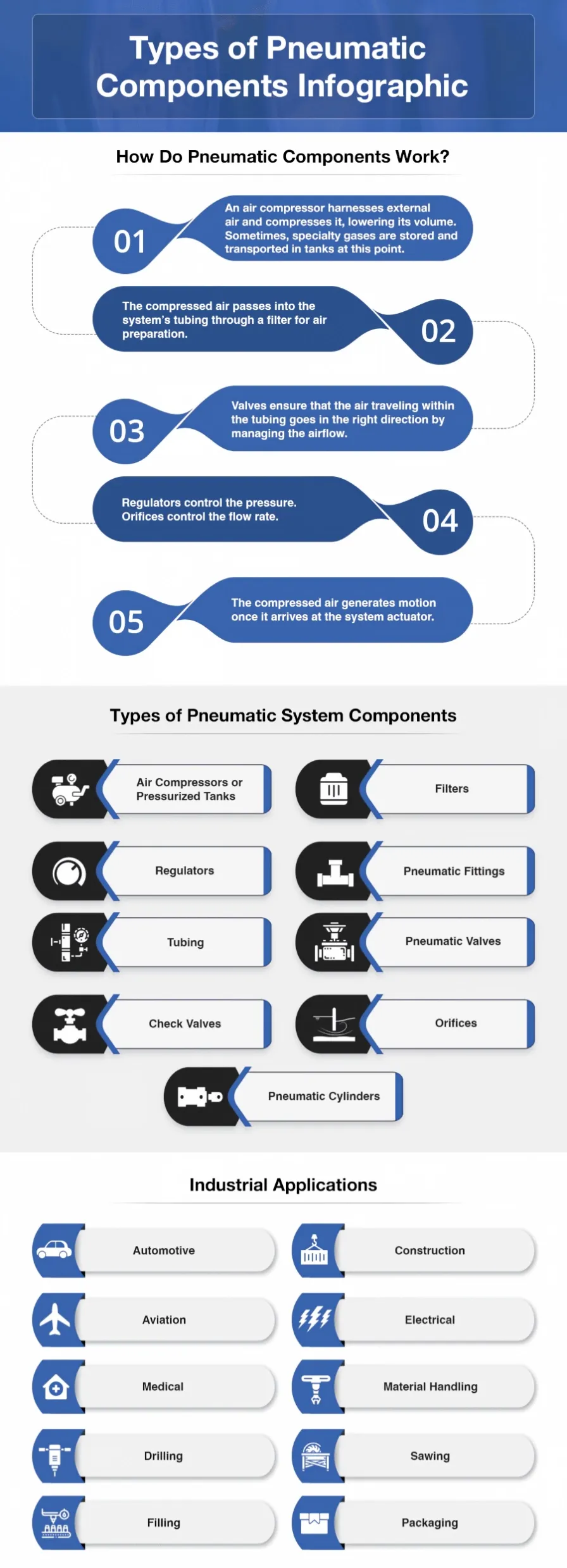
How Do Pneumatic Components Work?
Pneumatic systems use multiple components for general system control, and specifically to control airflow and material movements. Pneumatic equipment depends on compressed air, often in small amounts to power small devices, to carry and maintain air production on a consistent basis.
These systems typically function as follows:
- An air compressor harnesses external air and compresses it, lowering its volume.
- The compressed air passes into the system’s tubing through a filter for air preparation.
- Valves ensure that the air traveling within the tubing goes in the right direction by managing the airflow.
- Orifices help control the compressed air’s flow rate.
- The compressed air generates motion once it arrives at the system actuator.
Types of Pneumatic System Components
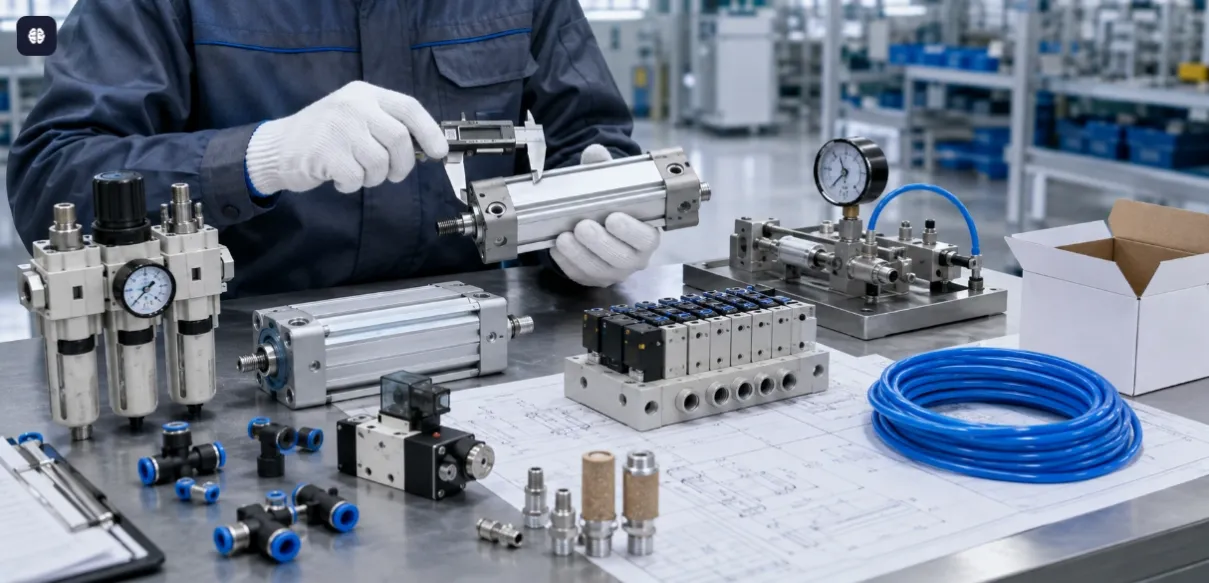
Pneumatic systems rely on a variety of components to facilitate efficient movement and control, including:
- Air compressors or pressurized tanks. Pneumatic systems use air compressors to capture external air and compress it for devices that need air to complete various functions.
- Filters. Air travels through filters into pneumatic tubing, catching debris, such as dust and particles, before the air continues on in the system.
- Regulators. Attached to the compressor, these components adjust the pressure of air within pneumatic systems.
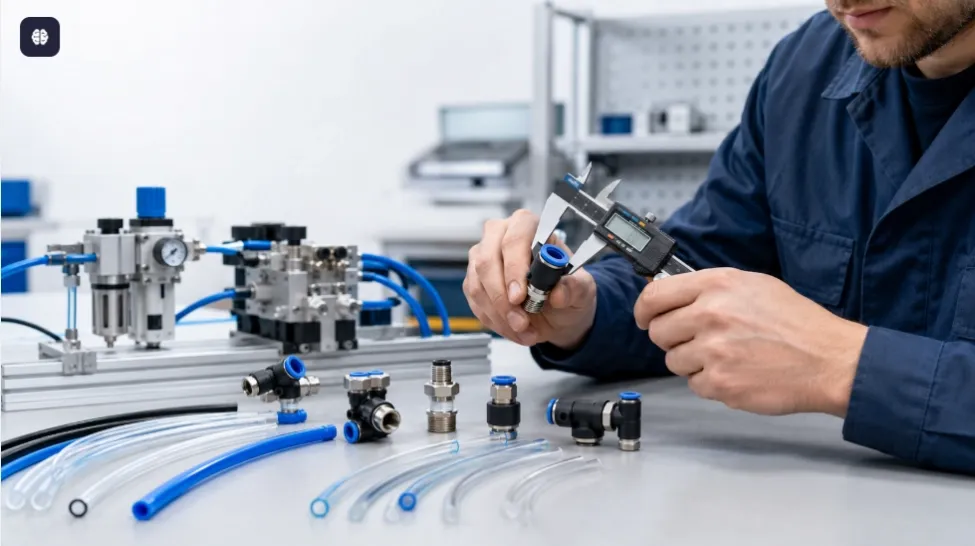
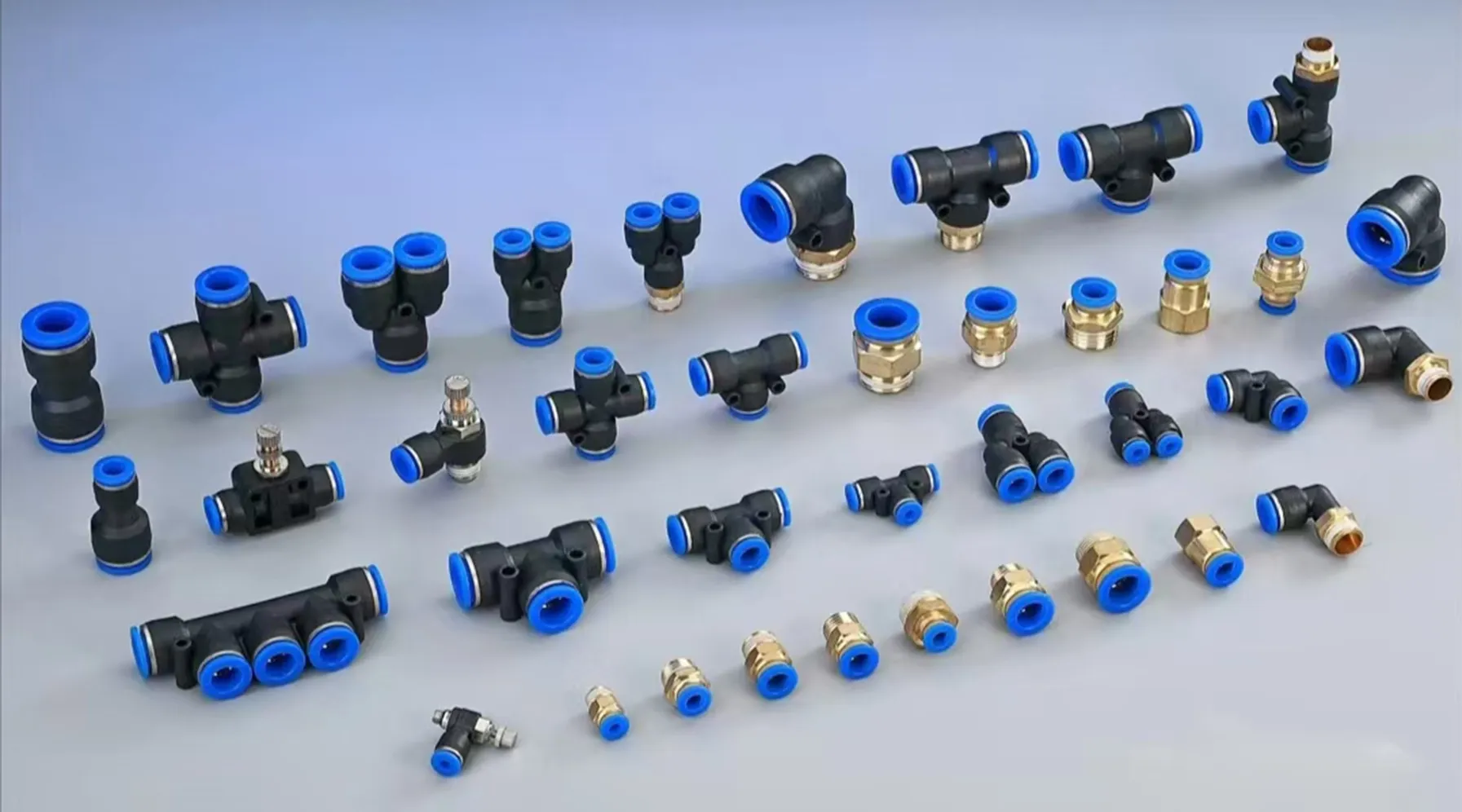
- Pneumatic fittings. Fittings connect the parts of a pneumatic system and offer control within that system, securely joining valves and preventing airflow leaks.
- Tubing. Acting as connecting components, pneumatic tubing and hose systems channel pressurized air from tanks to valves, actuators, and other parts.
- Pneumatic valves. These valves help control and direct airflow, enabling the efficient operation of pneumatic devices.
- Check valves. These valves are used to prevent backflow in a system. Check valves can also be used in a relieving function with an appropriate cracking pressure.
- Orifices. Systems rely on orifices to restrict and control the flow rate of compressed air and adjust system pressure, all at a predictable rate.
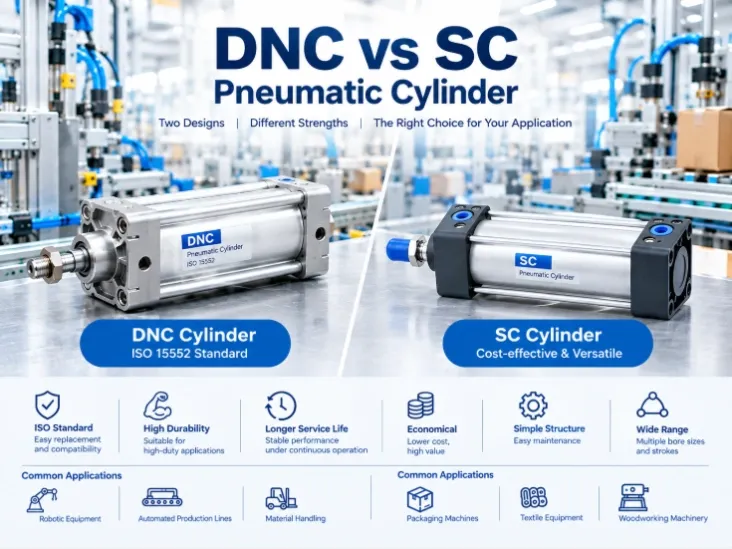
- Pneumatic cylinders. These are mechanical actuator components that create force using compressed air in a pneumatic system. Upon actuation, compressed air enters one end of the cylinder through a tube and applies force to an internal piston. In turn, the piston moves and generates linear or rotary motion.
Benefits/Features of Pneumatic Components
Pneumatic components offer several benefits and features, including:
Ease of Use
Pneumatic systems feature relatively simple, intuitive designs with standard components. Operators can easily manage rectilinear and oscillation movement speeds as well as air volume using basic on-off controls, orifices, and pressure adjustments. The air is readily available in the atmosphere or is already compressed and waiting in a tank for a system’s use. Also, when operations no longer require that compressed air, operators can release any excess internal compressed air into the exterior air without any toxicity issues.
Superior Strength and Reliable Performance
Pneumatic system components are highly durable to withstand most damage and resist corrosion. Additionally, equipment isn’t vulnerable to shock damage due to air’s compressibility, as air absorbs any excessive force within the system.
Compressed air is a consistent, reliable power source because of air’s constant availability in the atmosphere around us. Pneumatic systems have the ability to operate without electricity for a limited time using stored compressed air. Also, distance is not a concern with these systems, as air moves easily through tubing without the tubing restricting it.
Resistance Capabilities
Environmental factors such as corrosion, dust particles, and hot temperatures will not impact compressed air or its performance.
Cost-Effectiveness
Pneumatic components are cost-effective, which helps reduce the costs associated with pneumatic systems overall. The strength of pneumatic parts also helps reduce the need for frequent and costly maintenance, as they do not utilize hydraulic oils that might cause damage over time.
Cleanliness and Safety
The secure connection of valves in pneumatic systems allows for leak-free operation. If leaks do take place, they don’t leave a mess like hydraulic oils would because air simply returns to the atmosphere. Also, pneumatic systems are safe to use due to their ability to hold up in flammable environments, without the risk of overheating and causing fires or explosions. If components overload, an advantageous safety feature in newer models is that operations will simply shut down.
Industrial Applications
Many industries use pneumatic systems because of their versatility. Some of the specific applications for these systems include:
- Automotive. The automotive industry often uses pneumatic systems for a variety of tasks, including filling tires with compressed air, dismantling tires, opening and closing doors, painting vehicles, and powering air brakes on trucks and other heavy vehicles. Air brakes are friction brakes that utilize compressed air to power pistons and then apply pressure to brake pads to bring vehicles to a complete stop.
- Construction. Many types of construction equipment use pneumatic systems. For example, jackhammers and nail guns use compressed air to power them.
- Aviation. Aircraft often use pneumatic systems for a variety of functions, including pressurization, actuation, or cooling. They may also serve as sensing systems to help calculate an aircraft’s altitude and speed.
- Electrical. Pressure switches close electrical contacts once they reach a certain amount of pressure. Switches may make contact when pressure either increases or decreases.
- Medical. Pneumatic systems also serve the medical field. Medical researchers may use pneumatic bladders, for instance, which are inflatable bags that help seal ducts and drains, contain material spillage, or stabilize equipment. The industry also utilizes barostat balloons to maintain a consistent pressure level or aid in gastroenterology exams of the intestines.
- Material handling. Pneumatic conveyors help transfer materials between locations to allow for safe and efficient transportation within a facility.
- Drilling. Pneumatic drilling systems such as jackhammers and other compact drills use compressed air to complete drilling operations.
- Sawing. A number of pneumatic saws and other cutting tools, including chainsaws, pipe cutting machines, circular saws, hacksaws, band saws, and reciprocating saws, use compressed air.
- Filling. Facilities requiring filling operations may use pneumatic filling systems to facilitate the free flow of bulk solids and other materials, weigh them, and discharge them into packaging.
- Packaging. Pallet-loading machines, unloading stations, and many other types of packaging equipment use pneumatic cylinders and systems to function.