Oct 23, 2026pneumatic fittings
Inside a Pneumatic Push-In Fitting: Components and Functions
Understand pneumatic push-in fitting components, their functions, and how quality materials improve sealing, durability, reliability, maintenance, and overall system performance.
Inside a Pneumatic Push-In Fitting: Components and Functions
Push-in pneumatic fittings are found in almost every compressed air system, from packaging machines and CNC equipment to robotic assembly lines. Their compact design makes tube installation quick and maintenance simple, but what happens inside the fitting after the tube is inserted? Understanding its internal structure helps engineers and buyers choose reliable fittings and avoid air leakage, tube pull-out, and unnecessary downtime.
What Is a Push-In Pneumatic Fitting?
A push-in fitting is a connector designed to join pneumatic tubing with valves, cylinders, air preparation units, and other components. Instead of using clamps or compression nuts, the tube is simply pushed into the fitting until it locks securely in place. To remove the tube, the release ring is pressed while the tube is pulled out.
Although the operation is simple, the sealing system inside the fitting is carefully engineered to ensure long-term performance.
Main Components Inside a Push-In Fitting
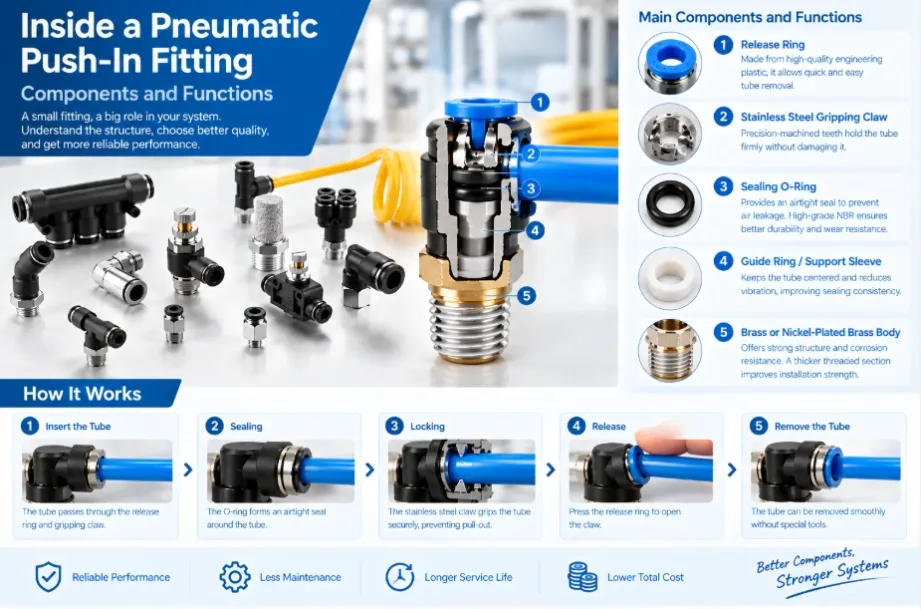
A standard push-in fitting usually contains several key parts, each performing a specific function.
1. Plastic Release Ring
The blue or black release ring is the first part users interact with. Pressing this ring releases the gripping mechanism, allowing the tube to be removed without damage.
High-quality fittings use virgin engineering plastic, which offers better toughness and maintains its shape after thousands of connection cycles.
2. Stainless Steel Gripping Claw
Just below the release ring is the stainless steel gripping claw, often called the collet. This part grips the outside of the pneumatic tube once it is inserted.
The claw has precision-machined teeth that hold the tube firmly while avoiding excessive damage to its surface. Inferior fittings often use softer metal or poorly machined teeth, which may either fail to hold the tube securely or scratch it excessively.
3. Sealing O-Ring
The O-ring is the heart of the sealing system. When the tube is fully inserted, the O-ring forms an airtight seal around its outer diameter, preventing compressed air from escaping.
The quality of the sealing ring directly affects leakage performance. Premium NBR or other high-grade elastomers provide better resistance to wear, oil, and repeated pressure cycles.
4. Guide Ring or Support Sleeve
Many quality fittings include an internal guide sleeve that keeps the tube centered during insertion. This prevents uneven pressure on the O-ring and improves sealing consistency.
It also reduces tube vibration during operation, extending both tube and fitting life.
5. Brass or Nickel-Plated Brass Body
The fitting body provides structural strength and connects to threaded ports. Nickel-plated brass is widely used because it combines corrosion resistance with excellent machining accuracy.
A thicker threaded section also increases installation strength and reduces the chance of thread damage during assembly.
How These Components Work Together
When the tube is pushed into the fitting, it first passes through the release ring and gripping claw before reaching the O-ring. Once fully inserted, the claw locks onto the tube while the O-ring creates an airtight seal.
As air pressure increases, the gripping force becomes more secure, helping prevent accidental tube pull-out. At the same time, the O-ring maintains reliable sealing even under continuous pressure.
During maintenance, pressing the release ring opens the gripping claw, allowing the tube to be removed smoothly without special tools.
Why Internal Quality Matters
Two fittings may look nearly identical from the outside, but their internal components can differ significantly.
Higher-quality fittings generally feature:
Virgin engineering plastic release rings
Precision stainless steel gripping claws
Premium sealing O-rings
Thicker threaded sections
Nickel-plated brass bodies with accurate machining
These improvements result in fewer leaks, stronger tube retention, longer service life, and lower maintenance costs.
Choosing the Right Push-In Fitting
When selecting pneumatic fittings, don't focus only on price or appearance. Ask suppliers about the materials used inside the fitting, the sealing ring quality, thread machining, and durability testing. Reliable manufacturers can explain their internal design and provide consistent product quality.
A well-designed push-in fitting may be a small component, but it plays a critical role in maintaining the efficiency and reliability of an entire pneumatic system. Investing in quality fittings reduces unexpected failures and helps keep production running smoothly.