Pneumatic cylinder
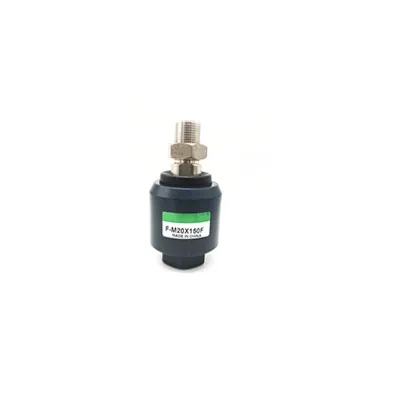
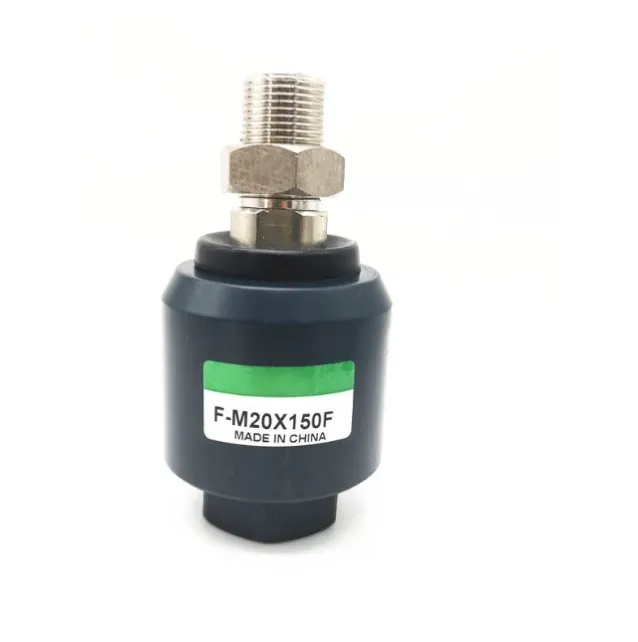
Float Joint for Pneumatic Cylinders
Float Joint for Pneumatic Cylinders
Specifications
- Material
- Carbon steel
- Operation pressure
- 0.1-0.9Mpa
- Working Medium
- Air
- Working temperature range
- -5-60 degree
Float Joint for Pneumatic Cylinders
The Float Joint is designed to compensate for minor installation errors between a pneumatic cylinder and the driven mechanism. It minimizes side loads on the piston rod, reduces wear on seals and bearings, and extends the service life of the cylinder.
Key Features
- Compensates for installation misalignment Absorbs slight angular and axial deviations between the cylinder rod and moving parts.
- Extends cylinder service life Reduces side loading, protecting piston rods, rod bearings, and internal seals.
- Smooth floating movement Allows limited self-adjustment during operation, improving machine stability.
- High-strength construction Manufactured from durable steel with corrosion-resistant surface treatment for long-term industrial use.
- Simple installation Standard threaded connection fits most ISO and SC, SU, SI, DNC pneumatic cylinders.
- Low maintenance Robust structure requires minimal maintenance under normal operating conditions.
Technical Specifications
Item | Specification |
Product Name | Float Joint |
Material | Carbon Steel / Alloy Steel |
Surface Finish | Zinc Plated or Nickel Plated |
Thread Type | Metric Thread |
Bore Size | 20, 25, 32, 40 mm |
Operating Temperature | -20°C to +80°C |
Application | Pneumatic Cylinders |
Installation | Rod End Connection |
Benefits of Using a Float Joint
Many pneumatic cylinder failures are caused not by poor cylinder quality, but by improper installation. Even a small amount of misalignment can generate continuous side force on the piston rod.
Using a float joint helps:
- Reduce rod bending stress
- Prevent premature seal wear
- Improve positioning accuracy
- Reduce vibration
- Increase equipment reliability
- Lower maintenance costs
- Extend cylinder operating life
For automated production lines running continuously, a float joint is one of the simplest and most cost-effective upgrades.
Typical Applications
The Float Joint is widely used in:
- Industrial automation equipment
- Packaging machinery
- Conveyor systems
- Pick-and-place machines
- Textile machinery
- Food processing equipment
- Electronic assembly lines
- Robotics
- Material handling systems
- CNC auxiliary equipment
Quality Assurance
Every float joint is manufactured under strict quality control procedures.
Our production process includes:
- Precision CNC machining
- Dimensional inspection
- Thread accuracy inspection
- Surface finish verification
- Assembly testing
- Final quality inspection before shipment
This ensures consistent performance and reliable operation in demanding industrial environments.
OEM & Custom Manufacturing
We support OEM and custom manufacturing services, including:
- Custom thread specifications
- Special dimensions
- Different surface treatments
- Laser logo marking
- Customized packaging
- Bulk production for distributors and equipment manufacturers
Frequently Asked Questions
What is a float joint used for?
A float joint connects the cylinder rod to the driven mechanism while allowing slight movement to compensate for installation errors and prevent side loading.
Which cylinders are compatible?
It is suitable for many standard pneumatic cylinders, including SC, SU, SI, DNC, ISO 15552 cylinders, and other cylinders with matching thread sizes.
Does a float joint increase cylinder life?
Yes. By reducing lateral force on the piston rod and seals, it helps extend cylinder service life and reduces maintenance requirements.
Can you manufacture custom sizes?
Yes. We can produce customized thread sizes, dimensions, and finishes according to customer drawings or samples.