Jul 20, 2026pneumatic cylinder
Pneumatic cylinders: everythig you need to know
Pneumatic cylinders, everything you need to know
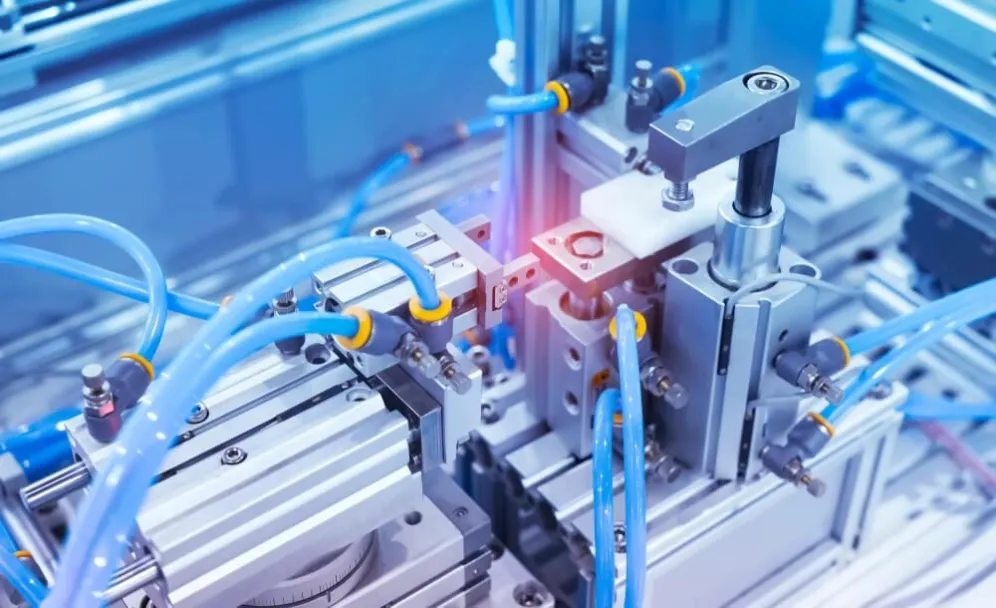
Pneumatic Cylinders: Everything You Need to Know
Pneumatic cylinders are essential components in industrial systems that use compressed air to generate linear motion. Their versatility, efficiency, and durability make them an ideal choice for applications in automation, manufacturing, and material handling. Among the types, double-acting and single-acting cylinders stand out due to their widespread industrial use. In this article, we will explore the types of pneumatic cylinders, their parts, benefits, and why choosing protective bellows is key to optimizing their performance. Additionally, we will analyze how stainless steel cylinders offer greater resistance and durability in demanding environments.
What is a Pneumatic Cylinder?
A pneumatic cylinder is an actuator that transforms the energy of compressed air into mechanical linear motion. This enables machines and industrial equipment to operate with high efficiency and precision.
There are various types of pneumatic cylinders depending on their design and function:
◎Single-Acting Pneumatic Cylinder: Uses air pressure to extend the rod and a spring to retract it. Suitable for applications requiring movement in only one direction.
◎Double-Acting Pneumatic Cylinder: Uses compressed air energy to move the piston in both directions. Greater force and control in material handling and industrial automation.
◎Rodless Cylinders: Do not have an external rod; motion is transferred directly to the object. Ideal for limited spaces and long-stroke applications. Parts of a Pneumatic Cylinder A pneumatic cylinder consists of several essential parts:
◎Cylinder Body: Contains the piston and allows rod displacement.
◎Piston: Moves within the cylinder, driven by compressed air.
◎Rod: Connected to the piston, it transmits motion to the load.
◎Seals and Gaskets: Prevent air leaks and ensure efficient operation.
◎Front and Rear End Caps: Seal the cylinder and contain the air connections.
How Many Types Are There?
Pneumatic cylinders can be classified by their structure and use:
◎Compact Cylinders: Designed for tight spaces.
◎Guided Cylinders: Incorporate a guide for greater stability.
◎Telescopic Cylinders: Provide a longer stroke in compact spaces.
◎Locking Cylinders: Maintain a fixed position under load.
◎Rotary Cylinders: Convert compressed air into rotational motion.
Calculation
◎To select the right cylinder, consider the following:
◎Required Force = Air Pressure x Piston Area
◎Stroke Length: Determines necessary displacement.
◎Cylinder Diameter: Defines the amount of force generated.
In systems like Festo, it is common to use specialized software to optimize the design and operation of the cylinder. These programs accurately calculate the required force, necessary air pressure, and optimal stroke length for each application. They also facilitate the selection of materials such as stainless steel to ensure greater resistance and durability in demanding industrial environments. Implementing these tools improves operational efficiency and extends the pneumatic cylinder’s service life, reducing maintenance and associated costs.
Advantages
Pneumatic cylinders offer several advantages in industrial applications:
◎High Precision: Ideal for automated processes.
◎Low Maintenance Cost: Simpler and cheaper than hydraulic systems.
◎Fast Response: Activate within milliseconds, improving production efficiency.
◎Greater Safety: No risk of liquid leaks as in hydraulic systems.
Advantages of Pneumatic Cylinders and Their Protection
Pneumatic cylinders are widely used due to their lightness, speed, and low maintenance. Their proper functioning depends on preventing contamination and wear, for which protective bellows are essential.
◎Ensure correct operation of a pneumatic cylinder.
◎Extend the service life of pneumatic actuators.
◎Prevent premature deterioration in the automotive industry and other demanding applications.
With Fuelles solutions, your pneumatic cylinders will always be protected, regardless of the operating environment. Contact us to find the best solution for your needs.
Conclusion Pneumatic cylinders are an efficient solution to generate motion in industrial applications. Their correct selection, maintenance, and protection with industrial bellows guarantee greater durability and performance. If you seek to optimize your pneumatic equipment, Fuelles has the best solution for you.